
Why Your Brain Sabotages Your Content

Your subscriber count is stuck at 8K, that number sits in your brain like an anchor, and everything gets measured against it.
New video gets 50 subs, you think it flopped, sponsorship offer comes in, you think they only want you because you're small, brand partnership opportunity, not worth your time, thinking about making a second channel, nah, haven't even maxed out the first one.
Meanwhile you made $10K last month, got invited to a convention, three game companies reached out, a creator you respect asked for your advice, landed voice acting work, you're on the official socials of a major game.
All of that is REAL, all of it matters way more than 8k subscribers, but it's invisible so your brain ignores it.
WYSIATI: What You See Is All There Is
I read the book "Thinking, Fast and Slow" by Daniel Kahneman. It's a psychology book, not a marketing book. It's heavy on the science and honestly not for everyone, but it's made me realize how much of creator decision-making is just our brains doing what brains do, very often not very logically.
The book breaks down how our brains work. “System 1” is fast and emotional and makes automatic decisions. “System 2” is slow and deliberate but lazy, it mostly just agrees with System 1. Most of the time, System 1 is lazy too. It looks at what's visible and calls that the whole picture.
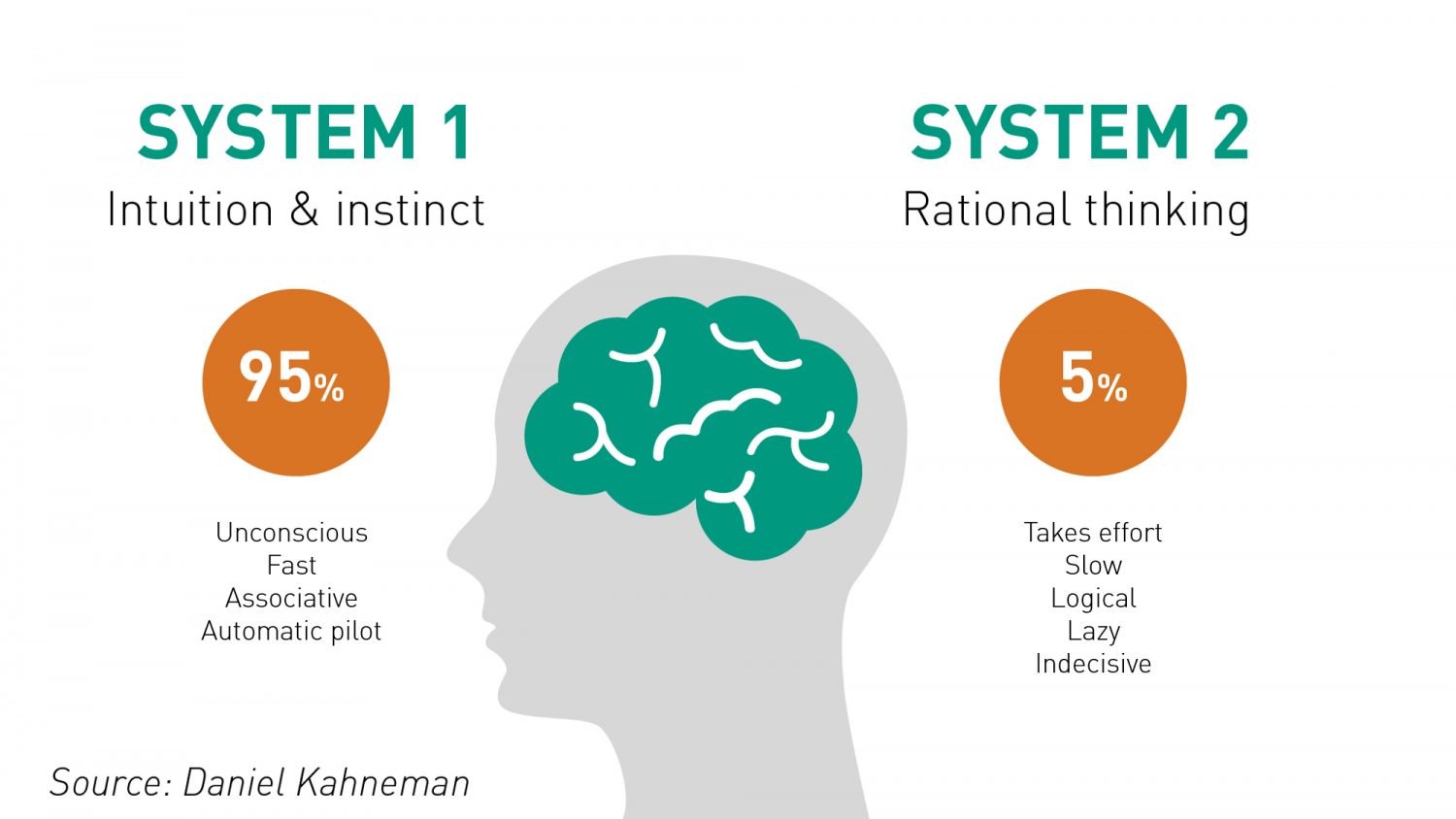
You see subscriber count. It's right there in your YouTube analytics. Visible.
You don't see income, inbound opportunities, or relationships. Invisible.
So your brain, being lazy, decides that what you see is all there is. Subscriber count equals success. Everything else equals doesn't matter.
Except it does matter - it matters a lot more!
Anchoring
Anchoring is when your brain locks onto one thing (in this case, subscriber number) and uses it as the reference point for everything else.
You didn't consciously choose 8K as your anchor. It just happened. You saw the number, it stuck, and now it's the lens you view everything through. Every new piece of information gets compared to it automatically.
Got a brand deal? Compare it to 8K. "Is this worth it for my subscriber count?" New opportunity? "Will this help me get past 8K?" Thinking about diversifying? "Should I focus on growing 8K first?"
The subscriber count becomes the question you're answering even when it's not the right question. The real questions are: Am I making money? Am I building real relationships? Am I getting opportunities? Am I learning and growing?
None of those questions have anything to do with 8K.

Sing along not included
What You're Missing
Let me be specific because this matters.
I have about 9K YouTube subscribers. By the subscriber metric, I'm small. By the visibility metric, I'm not impressive. I don’t have any shiny plaques to take selfies with. If I only looked at subscriber count, I'd think I'm behind.
But here's what that anchor is hiding:
I have a digital course that's built and running (even when enrollment slows). I work under contract with a major game company. I've been invited to speak at industry events. Several game studios and peripheral companies have reached out about potential work. I got a voice acting credit. I was on the official socials of Gorilla Tag. I have professional relationships with creators who have 100K+ followers.
None of that shows up in "8K subscribers." All of it shows up in income, opportunities, and relationships.
The subscriber count anchor is making me (and probably you) measure success by the wrong metric.
Making the Invisible Visible
The fix isn't complicated, just intentional.
Track income instead of just subscriber count. Put it somewhere you see it. Maybe it's a spreadsheet you check monthly, maybe it's a note on your phone. When you see "$5K from course sales last month" as often as you see "8K subscribers," your brain's anchor shifts.
Keep a list of inbound opportunities. Every time someone reaches out about collaboration, sponsorship, or partnership, write it down. Review it monthly. When you see "12 inbound opportunities this quarter" sitting next to "8K subscribers," which one suddenly matters more?
Write down creator relationships. Who have you collaborated with? Who respects your work? Who asked your advice? This is invisible until you make it visible, but it's usually more valuable than followers.
Track engagement metrics that actually mean something. Views to subscribers ratio, watch time, comments, shares. Is your audience actually engaged or are they just numbers?

The only unhealthy journaling is probably this
When you start seeing the invisible numbers as often as you see the visible ones, your brain stops using subscriber count as the anchor. The reference point shifts. Suddenly you're measuring success differently, and suddenly you realize you're actually doing better than the anchor made you think.
Stop chasing subscriber count. Start tracking what actually matters: income, opportunities, relationships, engagement. That's what builds a sustainable career. That's what compounds over time.
Understanding how to measure actual success instead of chasing vanity metrics is what separates creators who build sustainable income from creators who burn out chasing numbers that don't matter.
That's what VR Content Lab teaches: not just how to make content, but how to build something real by focusing on what actually works.
Self-paced course, Discord community, other creators thinking strategically about what success actually looks like.
Check it out at vrcontentlab.com.
