
Batching Content When You Work Full Time

When I worked at LIV, I didn't have time to film every day. I had a job, it paid my bills, and that came first, so I figured out how to make content work around it, not the other way around.
This is what worked for me. It might not work for you, but maybe it gives you a starting point for figuring out your own system and working around your personal schedule.
Why Batch?
You can't post or film daily if you work full time (or at least I couldn’t, if you can….I’m impressed!) So, you work with what you actually have, which is usually one or two days a week where you can dedicate time to content (and maybe sporadically throughout the week).
Batching is just accepting that fact and building a system around it instead of pretending you have 40 hours a week for content creation when you actually have maybe 10, then being disappointed by not finishing yet another video “on time”.
WHAT I DID
Weekends I'd write scripts for longform content and film short-form content, nothing fancy, just whatever games or apps interested me at the time. I'd script things out and batch record everything I could, usually getting 2-3 short-form videos for the week done in an hour or two.
Mondays I'd film my talking head segments for longform content (and sometimes shortform depending), which is also the only time I'd put on makeup for the week (lol). I'd do my makeup once, set up my space once, and record multiple talking head segments back to back, usually 1-2 in one session. This is where the biggest time save actually happens. You're not getting your lighting setup five times, you're doing it once, you're not putting on makeup five times, you're doing it once.

If you're self-conscious about doing makeup for video, yeah, that's annoying, and if you're a girl who normally doesn't wear much makeup, suddenly looking polished enough for video feels like extra work. I get it. But once you accept that you're doing it once a week instead of five times, it becomes way less painful.
After filming I'd start editing if I had time, but usually I'd save that for other days in the week. Throughout the week I'd edit whenever I could fit it in, not all at once, just whenever I had a couple hours. Some days nothing, some days a few hours. I'd prioritize by when I wanted the content to come out and how much work it required. Longforms usually take longer so I'd start chipping away at that edit right away alongside short-form content. The shorts got edited and scheduled throughout the week, whatever day they were set to release.
Friday is usually when my longform videos would go out, since I'd had the whole week to work on editing, find B-roll, make it actually good. That was the piece I was most invested in
Shorts vs Longform
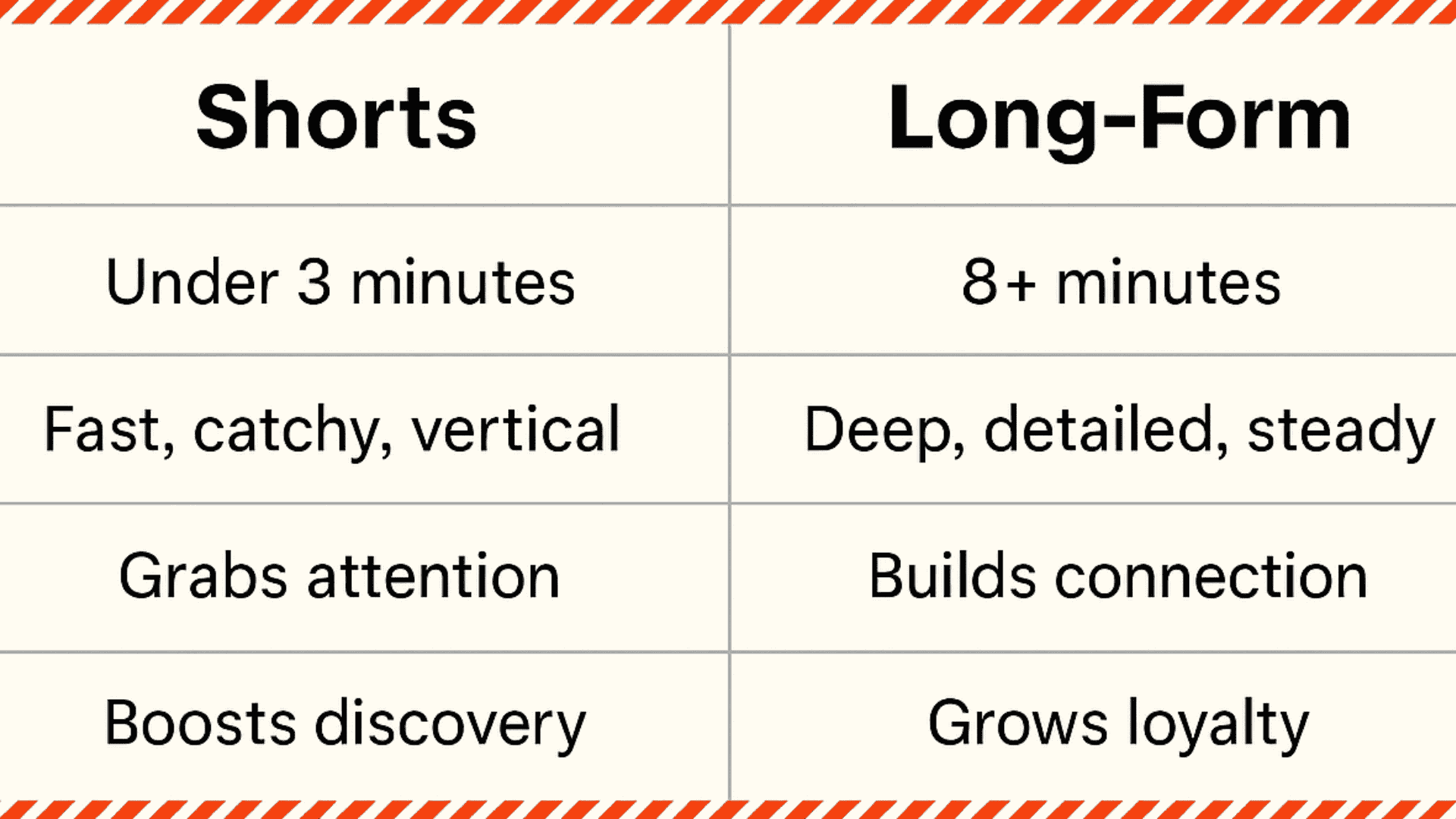
Shorts are so fast to make that they're seductive. You film one in 5 minutes, edit it in 20, post it, get views immediately. Get that dopamine hit.
But know this: shorts build your audience, longform builds your income. Shorts get the initial view bump (and maybe some followers/subscribers), but longform compounds over time and actually makes money through ad revenue and affiliate clicks, etc.
When I got better at content strategy, I realized I was making too many shorts because they were easy and I could strike them off my checklist (satisfying), but that meant less time for longform. The longform videos from years ago still get views and still make money. The shorts I made three months ago? No one cares about those anymore.
Credit: views4you
I'm not saying don't make shorts. I'm saying know what each one is for and don't sacrifice the thing that actually pays you for the thing that feels productive.
Your Day Job Is the Priority
When I worked at LIV, my job was the reliable income. Content creation had to become my side thing, no matter how much I wanted it to be the main thing.
That meant sometimes I had to move a video back a week because work got hectic. That meant sometimes I missed a posting schedule. That meant sometimes I showed up to film day exhausted and just didn't have it in me.
That's not failure! That's just reality when you're trying to balancing two things.
Don't feel guilty about prioritizing your actual paycheck. Your day job is what keeps you alive. Content creation is what builds toward something bigger, but it's not there yet. (Switching from hobbyist creator to full time creator might be a future blog post, we’ll see!)
Stop Being a Perfectionist
People get way too attached to perfecting a short form video. 6 hours editing a 30 second clip, tweaking audio, color grading, when they could have filmed 3 more shorts in that same time and edited them quickly.
There's a quality threshold that matters and then there's perfectionism that doesn't. A short doesn't need 6 hours of work. It needs to be clear, watchable, and have good audio. That takes maybe an hour if you know what you're doing.
Save the perfectionism for longform. That's where it matters. For shorts, good enough is actually good enough.
Realistic Expectations
Recording takes energy, editing takes energy, showing up on camera consistently takes energy. You might only batch once or twice a month if your job is really demanding. That's fine. That's still consistent.
Posting twice a week is better than posting daily when you're exhausted and it burns you out by month three. The goal isn't to match full-time creators, the goal is to build something sustainable while you have a real job paying your bills.
And if you're using a content calendar for your own planning, don't treat those dates like they're sacred deadlines. I used to stress about missing my own self-imposed schedule and feel like a failure. Then I realized the only person who knows I missed Tuesday’s video is me. Your audience doesn't check your calendar, they just see content whenever it shows up. If a video I planned for Tuesday came out Thursday instead, nothing happened. Views still came, people still watched it.
Don't give yourself stress over deadlines you made up. Give yourself permission to move things around when life gets in the way. Your audience won't care and you'll burn out way slower.
AN EXAMPLE SCHEDULE
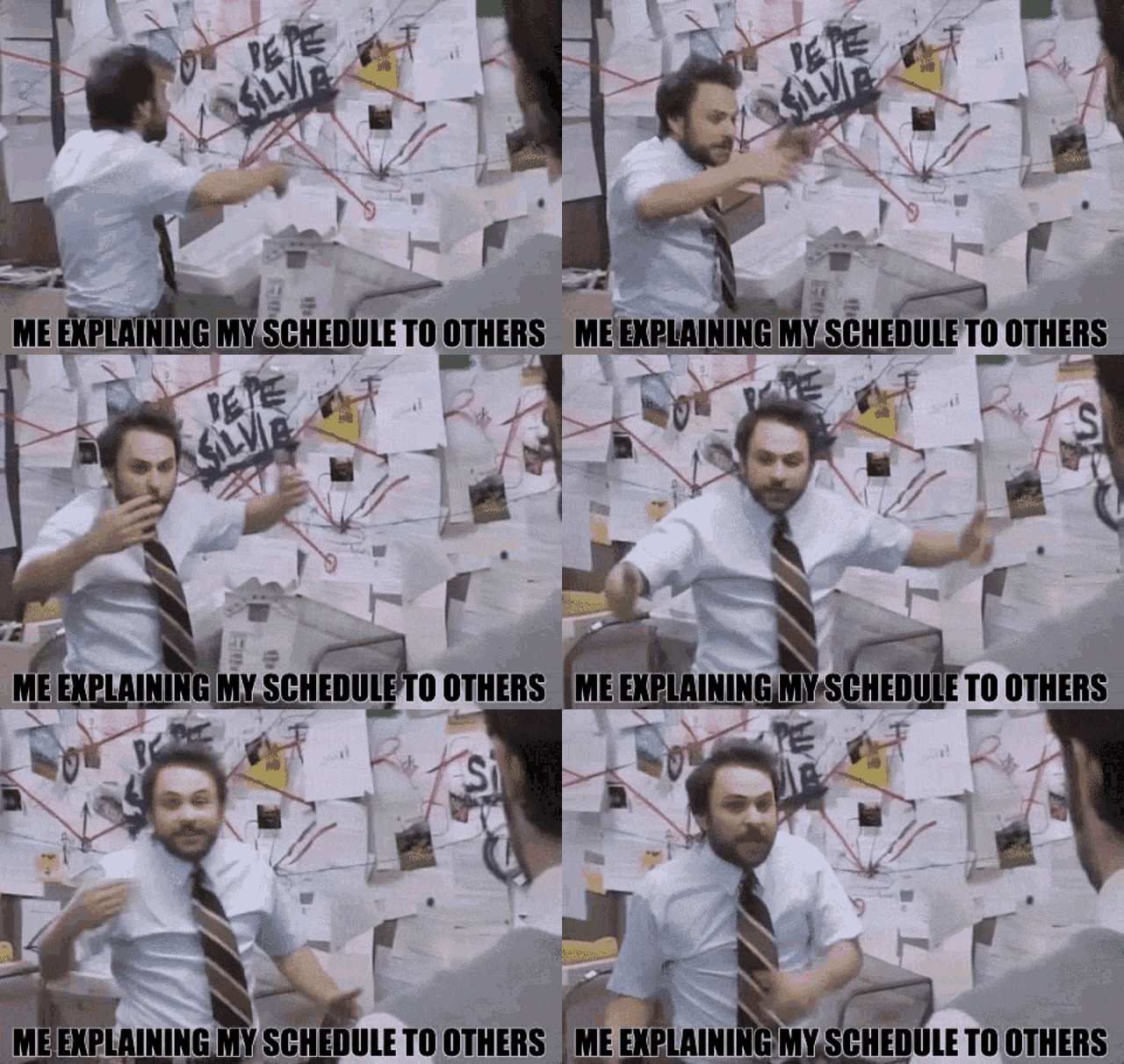
One weekend day for batching, maybe 3-4 hours if you're filming both shorts and talking heads. The rest of the week is editing in chunks when you have time, usually in the evenings or whenever you can carve out an hour or two.
That's 3-4 hours of focused recording, then 5-10 hours of editing spread throughout the week, totaling maybe 10-15 hours a week on content. That's doable alongside a full-time job.
Is it as much time as someone can spend if they don't work? No. But it's actually realistic, and it actually works.
Building content while you work full time isn't about finding more hours, it's about being strategic with the hours you have. That's what VR Content Lab teaches: working smarter instead of just working harder.
Self-paced course, Discord community, other creators balancing real jobs with building something bigger.
Check it out at vrcontentlab.com.
