You're Not the Product
I've seen creators get upset because a brand didn't feature one of their videos. They feel ignored, undervalued, take it personally like the marketing team is deliberately ignoring them.
What they don't realize is that marketing teams have content calendars planned weeks or months in advance. Specific goals, specific messaging, specific audience they're trying to reach. One video, no matter how good, might not fit the brand guidelines or the message they need to send that week.
When you work for a brand instead of just yourself, everything changes. And watching this play out over and over taught me something important about how this actually works.
Individual Creator vs Brand Representative
When you're building your own channel, the rules are simple: you post what you want, you engage how you want, you build your own brand. Its you, you do you.
Your job is to grow your audience. Your reputation is your own. If you mess up, it affects you.
When you work with a brand or company, everything changes. You're not building your brand anymore, you're representing theirs. Your mistakes become their mistakes. Your reputation is theirs.
That might sound like a downgrade, but it means a company is taking you seriously enough to let you represent them. It means your actions have weight.
It also means you're not in total control anymore, and that's the hard part for a lot of creators to accept. But here's what makes up for it: you're not alone anymore, and you're working toward the same goal.
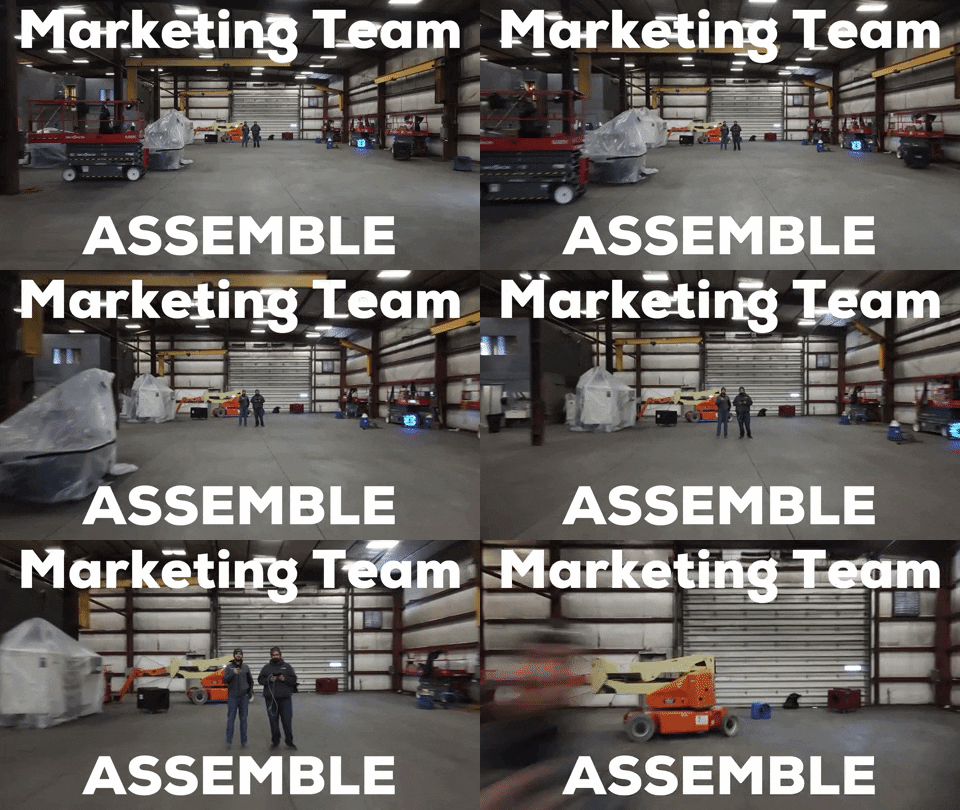
When you represent a brand, you're both trying to make the game, app or whatever successful.
You can celebrate wins with a team. You can ask for help and feedback when you need it. You can bounce ideas off people who are familiar with the brand’s style and voice instead of just shouting into the void and hoping something lands. Working with other people, with people who have different skills than you, is actually way more powerful than grinding solo.
You lose control, but you gain a team working toward the same goal.
Marketing Already Has a Plan
Marketing teams have content calendars. Most content is based around updates and announcements, about sending information to their audience or getting them to do something.
When you pitch an idea to a marketing team, sometimes it fits the narrative/subject of what the team is trying to tell. Sometimes it doesn't. And when it doesn't, that's not a failure on your part. That's just how strategy works.
I learned this the hard way at LIV, where I worked as as their entire marketing team essentially. We had creators making “Gorilla Tag knockoff” games left and right. Talented kids, its cool that they are trying their hand at making games, but the market was flooded with copies of the same concept. Our community was getting annoyed that we were featuring so many low-quality knockoffs, and it was starting to tarnish the reputation of the LIV Creator Kit itself.
We had to make a choice: feature everything and watch our credibility tank, or be strategic about what we highlight. We chose strategy.
We made Gorilla Tag the north star. Not because the knockoffs were bad, but because we needed to show big-name games that investing in LIV was worth it. Once we attracted the big fish, we could have more high quality games noticing that would consider adding LIV Creator Kit as well.
That decision sucked sometimes. Aspiring young game devs had their games rejected. But it was the right call for the platform, and it's why LIV's recommendations actually meant something.
Now with Gorilla Tag, every post exists for a reason. When we were leading up to GorillaCon, we're posting content that gets people to buy tickets. When merch drops, they're posting to drive sales. When they announce new games, they’re posting to build anticipation (and/or wishlists!). Each post has a purpose, a specific action or knowledge we want the audience to have.
Sometimes they have all the information of what’s coming when and can plan months ahead. Sometimes they’re working with moving parts like merch partners or VidCon logistics, so they post the info the moment it's available. But there's always a "why" behind the timing.
If you want to get featured, make a video that supports what the team's socials are currently saying. Don't make a video just hoping you’ll get exposure for more followers, make a video that further features something the team wants to communicate about. That's how you actually get on their channel.
Other People's Jobs Are at Stake
When you're an individual creator, the stakes are yours. If a video flops, it's your view count. If a sponsorship goes badly, it's your reputation.
When you represent a brand, the stakes belong to everyone at that company. Every piece of content you create matters because it has consequences that ripple way beyond just being featured or not.
A brand’s damaged reputation means people stop buying. Fewer sales means lower revenue. Lower revenue means layoffs. One piece of content gone really wrong can ripple through an entire company and cost multiple people their jobs.
E3 learned this the hard way with a single sexist tweet that went viral. One post. The backlash was massive, the reputation damage was real, and people lost their jobs over it.
Creators that brand want to work with long term aren’t just thinking about their own content or their own exposure, they're thinking about the larger strategy of the game itself and how their work affects the entire team/game.
Understanding this shifts how you work with brands from "they don't understand my how amazing I am" to "I see why that doesn't fit." You're not just protecting one person's career, you're protecting an entire company's health and everyone who depends on it.
How to Actually Work With Brands
Stop pitching individual ideas like you're trying to convince them your content is good. Instead, ask what they need. Ask what gaps exist in their content calendar. Ask what problems they're trying to solve or where/what they are trying to drive their audience.

When you come at it from "how can I help you" instead of "can you feature my video," everything changes.
Sometimes they'll say "actually we need someone to cover this specific thing." Sometimes they'll say "your voice would be great for this other project we're working on." Sometimes they'll say "none of our current projects match, but here's what we might have in six months."
Those conversations are where real opportunities live.
The creators who get angry about not being featured are the ones thinking small. The ones who understand that marketing has a bigger strategy are the ones building real income.
Get Hired!
Creator income is volatile. You're at the mercy of the algorithm, trends, whether people feel like engaging today. It can disappear overnight.
Brand representative income is slightly more stable because you're solving for something bigger than just engagement metrics. You're supporting a strategy, you're part of a team.
That means more predictable income. That means longer partnerships. That means opportunities that compound over time instead of resetting every month.
This advice is especially for those of you thinking about eventually working in marketing for a game company. Understanding strategy, understanding why brands say no, understanding that it's not personal, understanding that everyone's working toward the same goal, that's what makes you hireable. That's what separates creators who stay creators forever from creators who can actually transition into industry jobs.
Understanding how to position yourself strategically, how to work with brands, how to think beyond just your own content is what separates creators who hustle forever from creators who build sustainable income.
That's what VR Content Lab teaches: not just how to make content, but how to build real opportunities and partnerships that actually last.
Self-paced course, Discord community, other creators thinking strategically instead of just hoping to get featured.
Check it out at vrcontentlab.com.
