VR Isn't Dead. I Was at GorillaCon.

To most people over 25, I realize the title of this blog post sounds absolutely crazy. So I'm also going to say this upfront (and maybe break some kids hearts): I don't play Gorilla Tag for fun. It's not my game.
But then I stood there signing autographs on headsets, plushies, shirts, trading cards, and yes, a literal potato, while thousands of kids from other countries, and across the US waited in line to meet their favorite creators and buy Gorilla Tag merch. Suddenly all the "VR is dead" posts looked really stupid.
If You Don’t Play, Why Were you There?
I wore a red headband that matched Brie's in-game bandana. If you don't know Gorilla Tag's content side, Brie's a character that was created a few months ago. Frank handles the primary Gorilla Tag social media and was going to go on paternity leave not long after I got laid off from LIV. They asked if I wanted to fill his role temporarily while he was out, and Brie was born from that. I created all the video content while Frank was gone and still make Brie appearances now and then even though he's back (including at Creator Fest recently).
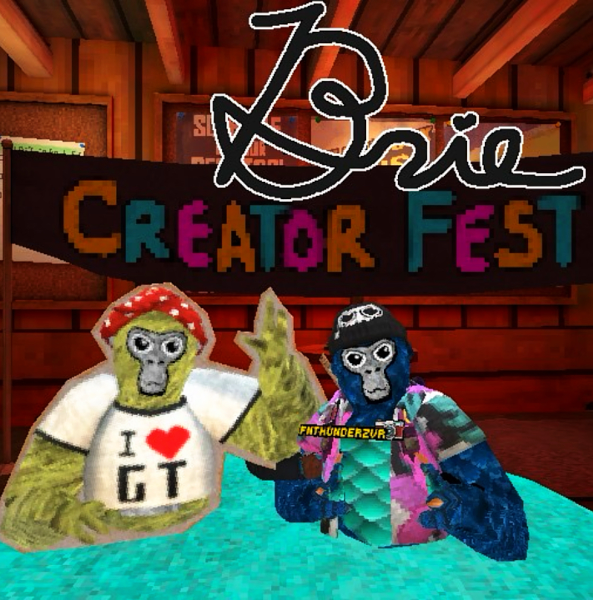
My cardboard cutout at Creator Fest in Gorilla Tag!
So when I showed up to GorillaCon wearing that red headband, kids recognized me constantly. Getting recognized felt surreal. Not as much as Lemming (he actually had to strategically time his movements to avoid getting completely swarmed), but enough that I was signing stuff all day.
What the heck was gorillacon?
June 25-27 inside VidCon Anaheim. This was the first official dedicated Gorilla Tag area, but they'd actually been at VidCon the year before with just a merch booth and some finger painters they flew out to sign autographs. That booth was in a dark corner next to the main stage and the lines were already insane. Gorilla Tag kids were the most prevalent force at VidCon last year, and this year they doubled down.
This time Another Axiom went all out. Creator meet-and-greets, panels, competitions, exclusive merch drops, playtests for new games. Lemming had AMAs and signings scheduled all 3 days.. New game announcements dropped throughout the weekend: Monke Mayhem (mobile), Contagion (PC and consoles).
Kaleah, RJ, and I were there filming daily recaps. Most kids (well, their parents) I met easily spent over $100 on merch. Flew in from other states. Some flew in from countries. They saved money specifically for this event.
Finger Painters and Creator Hierarchy
If you don't follow Gorilla Tag, here's what you need to know about their community structure. There's AAC (Another Axiom Creators), which is soft capped now at around 1,000 people. Then there's Finger Painters. Higher tier, way fewer people, much harder to get into, early access to everything. These are the top creators.
Some of the Gorillacon Finger Painters included Rae, Elliot, VMT, Sava, Mellomelt (who actually shaved his head live on the main stage), Fiizy, and others. Kids waited in huge lines just to get near these people. And then Lemming, the actual creator of the game, showed up and had to hide in Hawaiian shirts, hoodies and use back entrances.
The Merch and the Details
Kids were dropping serious money on this stuff. Most people (their parents) easily spent over $100 on apparel, plush toys, pins, beanies, collectibles like the Doughboi variants, with special in-game reward items tied to purchases. The merch was made by Juniper Creates and Makeship and some of it was all exclusive to the event, at least at launch.
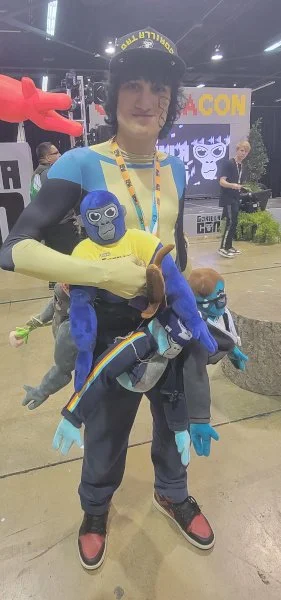
We were also giving away a unique cosmetic (Chimpany Octane's business card, with a code redeemable as a gold phone cosmetic in-game) and each person got one per account. I figured kids would try to game it to sell or “give to friends”, but about 95% of them understood the rule upfront or naturally assumed they only got one. The pushy ones were the kids who saw other kids getting interviews and wanted in on that action, hoping to get featured on the official Gorilla Tag socials.
Also I signed a potato and a squishy toy stick of butter. Just putting that out there.
Why?
The new game announcements weren't just hype. Monke Mayhem on mobile started because fake Gorilla Tag games started flooding app stores, and the official team wanted to give people an actual, legit option. Contagion for PC and console exists because not everyone can afford VR, or has space, or doesn't get motion sick. The team wanted to give more people a way in.
When they announced these, people cheered. They tried the demos we had set up on picnic tables. Some people didn't want to try because they didn't want spoilers before release, which is its own kind of hype. The Monke Mayhem playtest line was massive. People got to play in a 50-player map with Lemming and Frank. That's not a small moment for these kids.
Other VR/XR Events
Gamescom had Home of XR, which was huge and cool, multiple games and developers all in one space. You could rest, demo games from the biggest studios, network. It was comparable to GorillaCon in a lot of ways, but for adults (without the screaming kids).
AWE is starting to become a bit too stuffy for my taste. People talking about B2B partnerships and market size instead of just being excited about games. AWE is geared more towards enterprise and that's fine, but my personal preference and my heart belongs to the gaming side of things.
GorillaCon felt like a mini BlizzCon. Everyone there was hyped about the same thing. Everyone was waiting for announcements. Everyone was swapping channel names and talking about their favorite Gorilla Tag moments and their own content. It was fun and positive and genuinely focused on gaming, not enterprise networking dressed up as gaming.
The Thing Nobody Wants to Admit
If you think VR is dead, you weren't at GorillaCon. You haven't seen thousands of people in one place actually excited about VR, about the community, about what's coming next.
VR isn't dead. It's just not what traditional gaming told us it should be. Doesn't need $3,000 setups or high-end graphics or enterprise adoption. A kid with a $300 Quest and Gorilla Tag has a complete experience, a social network, a community.
That's enough. Apparently it's more than enough.
Building sustainable creator channels in VR means understanding your actual community, not chasing metrics that don't matter. That's what VR Content Lab teaches.
Self-paced course, Discord community, other creators building real audiences in a space that's very much alive.
Check it out at vrcontentlab.com.
