
The 4 Types of Quest Players
Meta recently published research breaking down Quest players into four distinct segments based on motivations and behavior.
The research was aimed at game developers—helping them design better games for different player types. But buried in that developer-focused data is something VR content creators desperately need: a framework for understanding who actually watches your content and why.
Most creators make content based on gut feeling. "My audience likes cozy games." "Social VR gets more engagement." "Tutorials always perform well." These might be true, but they're vague. You're optimizing for shadows instead of understanding the actual people consuming your content.
Meta's segmentation research could help give you a better lens. Not just "what games do people play" but "why do people play games and what are they looking for when they watch content about those games."
Meta's Four Quest Gamer Segments
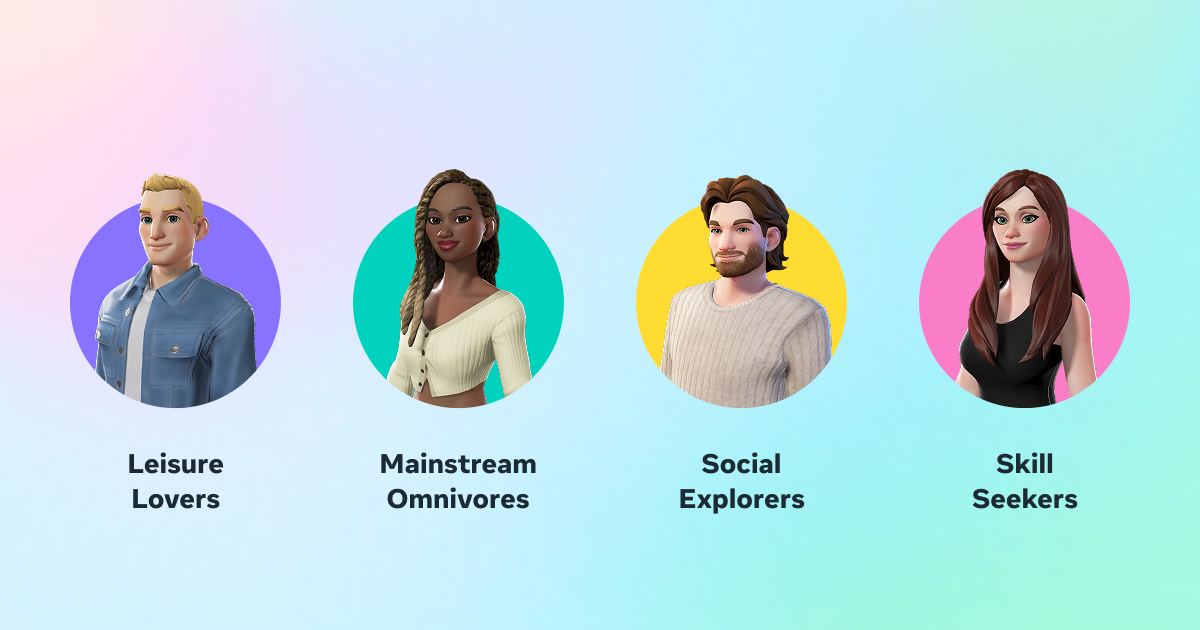
Meta identified four distinct player types based on research into gaming motivations and behaviors:
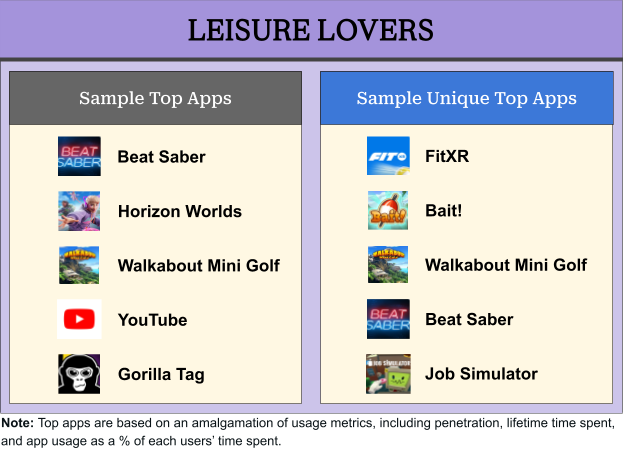
Leisure Lovers are casual gamers seeking relaxation and de-stressing. They prefer solo, low-pressure experiences—puzzle games, rhythm games, cozy simulators. They're not grinding for achievements. They're unwinding after work. Success for them is enjoyment and a sense of accomplishment without heavy time investment.
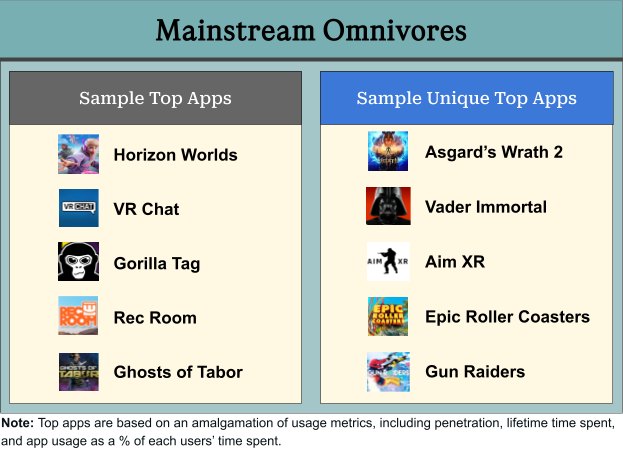
Mainstream Omnivores want balanced fun and challenge without being overwhelmed. They enjoy good stories and playing with friends or family they already know. They prefer familiar, well-known titles over cutting-edge experimental games. They're looking for practical, accessible experiences that don't require them to become hardcore enthusiasts.
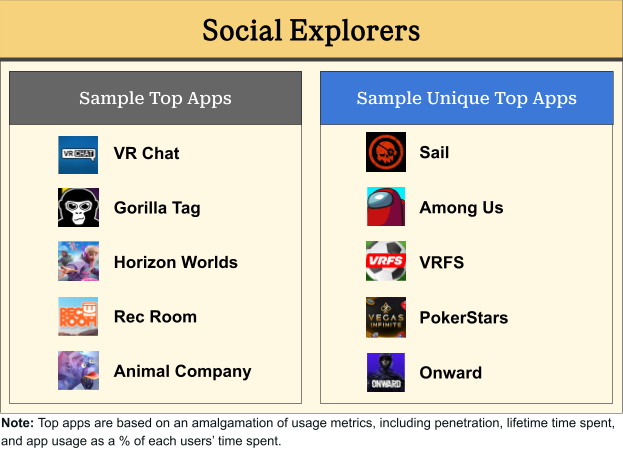
Social Explorers are motivated primarily by social connection and exploration in open, creative environments. They value playing with friends in sandbox or social genres. Think VRChat, Gorilla Tag, Animal Company. The game mechanics matter less than the social experience. They're there to hang out, create, and connect—not necessarily to win or master skills.
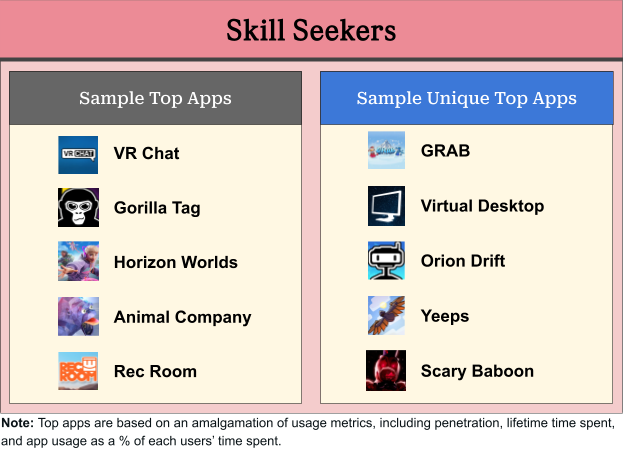
Achievement Hunters are competitive, skill-focused players motivated by mastery and progression. Leaderboards matter. Challenge matters. They want games that push them to improve and give them ways to measure that improvement. Difficulty is a feature, not a barrier.
What Each Segment Actually Watches
Understanding segments isn't just about the games they play—it's about what content they consume and why.
Leisure Lovers watch content that extends the relaxing experience. Calm gameplay. Wholesome moments. Satisfying loops. They're not looking for high-energy excitement—they're looking for content that feels like unwinding. Think ASMR vibes applied to gaming. Your tone, pacing, and energy level matter as much as the game you're covering.
Mainstream Omnivores watch content that helps them decide what's worth their time. Reviews. Recommendations. "Is this game good?" content. They're samplers, not deep-dive enthusiasts. They want you to tell them what's accessible, fun, and worth trying without requiring them to become VR experts. Curation content serves this audience.
Social Explorers watch content that captures social energy and moments. Chaotic multiplayer clips. Friend group dynamics. Lobby shenanigans. The gameplay matters less than the social interaction. They want to see what it's like to experience games with other people—the laughter, the chaos, the emergent moments that happen when humans interact in virtual spaces.
Achievement Hunters watch content that helps them improve or showcases impressive skill. Tutorials. Strategy breakdowns. High-level gameplay with context. They're looking for information they can use to get better, or they're watching to appreciate mastery. Entertainment value is secondary to educational value or skill demonstration.
How to Identify Your Segment
Stop guessing based on what games you cover. Start looking at how your audience actually behaves.
Read your comments. Not the ones that are "this is great!" or “lol” but what people are actually saying. Leisure Lovers leave wholesome comments about how relaxing your content is. Mainstream Omnivores ask practical questions like "What game is this?" or "Is it worth buying?" Social Explorers reference community and connection—tagging friends or talking about playing together. Achievement Hunters ask technical questions about settings, strategies, or how you pulled off a specific move.
Go read your last 50 comments right now. Separate each one by likely segment. What's the dominant pattern? That's your audience telling you who they are.
Pull your analytics. Look at retention rates across your last 20 videos. Which content type consistently holds attention? That's the segment you're successfully serving.
Analyze your top performers. Your top 10 videos tell you more about your audience than your content plan does. Pull your highest-performing content from the last 3-6 months. What segment does each serve? What's the game genre, content format, tone, and energy level?
Look for patterns. Do 8 out of 10 serve the same segment? That's your core audience. Are there 2 outliers that served different segments? Those might be opportunities to test.
Pick Your Segment and Commit
Once you know your segment, stop hedging. Commit to it.
If you're a Leisure Lover creator, be THE Leisure Lover creator. If you're serving Achievement Hunters, own that lane. If Social Explorers are your audience, lean into the chaos and community.
Trying to serve everyone means you're not the go-to creator for anyone.
Unfortunately, the games you personally love may not always align with the segment you actually attract. You might love competitive shooters, but if your audience is Leisure Lovers, covering competitive content is self-sabotage.
The 80/20 Principle applies brutally here. If 80% of your growth comes from one segment, stop spending energy trying to attract the other three. Double down on what works. Make more content for the people who are already watching.
This doesn't mean you can never cover other content. It means you understand that covering a competitive game when you're a Leisure Lover channel is a strategic detour, not your core identity. You're borrowing an audience, not building one.
Pick your segment. Make it your entire positioning. Build your reputation as the creator who serves that specific audience better than anyone else. That's how you stop being "another VR creator" and start being "the cozy VR creator" or "the VR tutorial creator" or "the chaotic social VR creator."
Everything else is noise—which is exactly the positioning strategy we teach VR content creators in Module 3 of VR Content Lab.
Everything I just explained—identifying your actual audience segment, understanding what they want from content, making strategic decisions based on real data instead of assumptions—that's what separates creators who build sustainable audiences from creators who post randomly and hope something works. VR Content Lab goes deeper with frameworks for analyzing your performance, positioning yourself for specific audience segments, and building content systems that serve your actual viewers instead of fighting them. It's a self-paced video course with a Discord community where you can connect with other VR content creators actually using this research to inform their strategy.
Check it out and enroll at vrcontentlab.com.
