Steam Next Fest VR Demo Coverage: How to Evaluate and Prioritize Games
Steam Next Fest drops hundreds of demos in one week. Creators see it as an opportunity. Then they open the list, realize there are 40+ VR games alone, and freeze.
Next Fest isn't about playing everything. It's about smart prioritization, knowing what's worth your coverage, and understanding how different formats serve different goals. This is a masterclass in content triage that applies way beyond one week of demos.
Let me show you my actual process.
Start With Prioritization, Don’t Download Everything
You will not play every demo. Accept this immediately.
I go through the full list and sort games into tiers before I launch a single one:
Tier 1: Games I already know. Demos for titles that launched on Quest or other platforms first. I have context. I know if I like them. I can cover them quickly and confidently because there's no learning curve.
Tier 2: Genres and concepts that fit my audience. Cozy games, games with an odd sense of humor, games with interesting VR mechanics. These get priority because even if they're new to me, they align with what my audience actually wants to see.
Tier 3: Everything else. Might be great games. Might be hidden gems. But if I have time constraints, these wait until Tier 1 and 2 are done.
This isn't about being picky—it's about being strategic. Your audience doesn't need you to cover everything. They need you to cover the right things well.
What I Actually Look For
Most demos run 15-30 minutes. I play them in full unless something goes wrong early. Here's what I'm evaluating the entire time:
Does this feel like VR? Not a flat game ported to headset with minimal effort. I want hand interactions, things I can actually pick up and manipulate, UI that exists in the world instead of floating menus. The second I see a flat cutscene or a world full of objects that look interactive but aren't, I know the developers haven’t quite hit the mark yet.
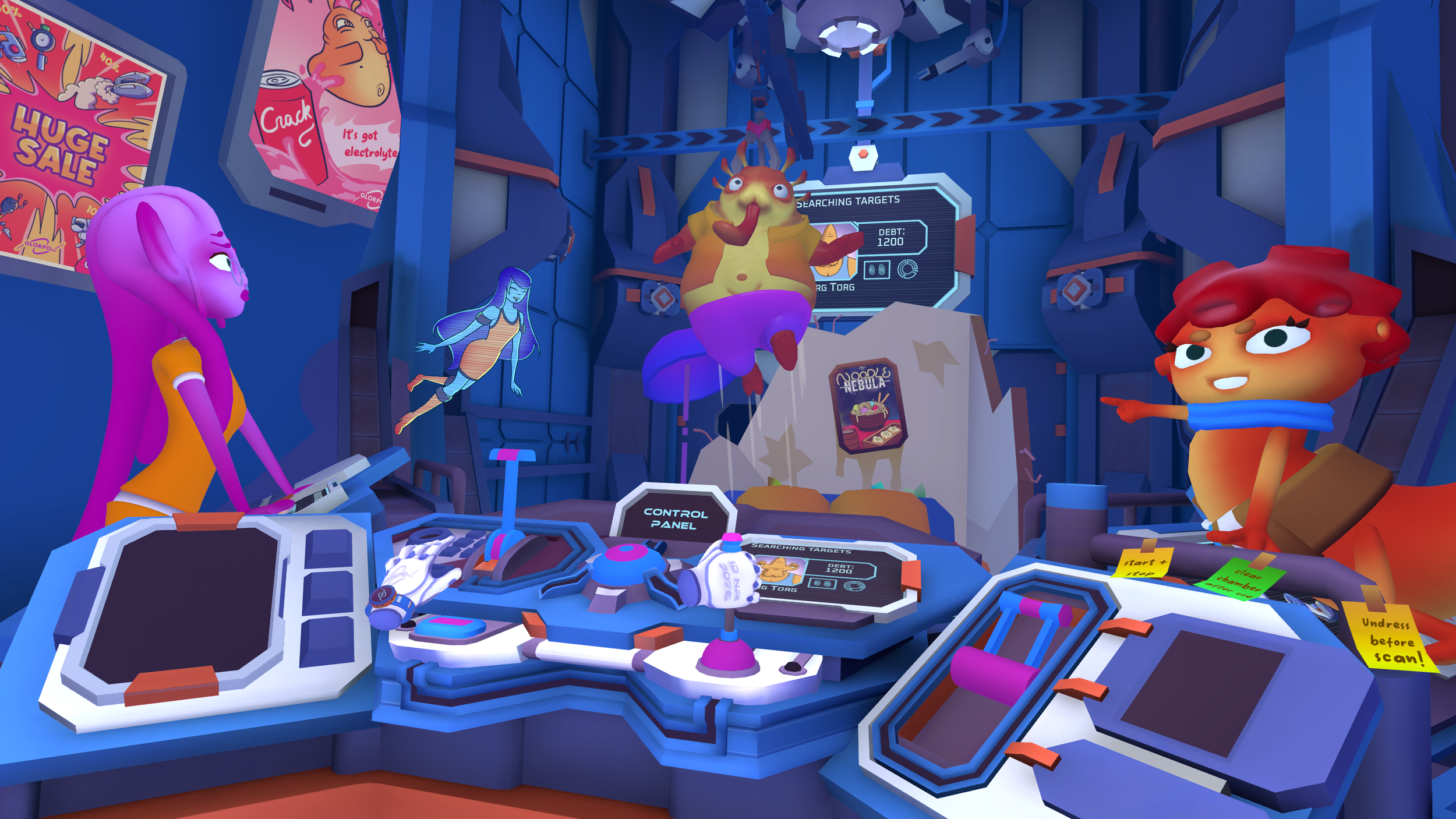
Is there depth here? Either in mechanics or story. Something that makes me think "okay, there's actually a game here, not just a tech demo." Space Control nailed this—Job Sim meets Rick & Morty where you work off your alien abduction debt doing weird jobs (abduction station, alien daycare, space food truck). I voiced characters so I'm biased, but even setting that aside, the variety of jobs and the humor threading through the gameplay showed real depth. That's not just "VR mini-games"—there's an actual game here.
Does it actually work? I'm not talking about perfection. Demos are rough by nature. But can I play it without constant lag? Does the UI make sense? Can I actually complete the core gameplay loop? If a demo can't nail the basics, the full release probably won't either.
Is there something unique worth highlighting? This is the coverage question. Solid execution of a familiar genre might be a good game, but is it worth a video? TMNT: Empire City is a great example—play as Leo, Ralph, Donnie, or Mikey with unique weapons and combat styles, cell-shaded graphics that nail the aesthetic, and 1-4 player co-op that actually feels solid. It's a licensed game that doesn't feel like a cash grab. That's worth covering.
Red Flags That Make Me Stop Early
I only bail on demos if they fail the technical bar. Not "this isn't for me" personal preference stuff—actual execution problems that tell me it's not worth my time.
Missing basic VR comfort settings. If I can't adjust vignetting, locomotion type, or turning options, that's a fundamental misunderstanding of VR design. These aren't nice-to-haves. They're accessibility basics. Even for a demo.
Bad UI/UX that breaks immersion. Button mapping that makes no sense. Menus I can't reach. Interactions that feel janky or unresponsive. If I'm fighting the interface instead of playing the game, I'm out.
Can't complete the core loop in the demo. Isle of Food had an interesting concept—find and garden ingredients, prep them in various ways, serve customers, unlock different decor to attract different customer types. But I got an order for an ingredient I didn't have and couldn't figure out how to get it within the demo. The game said comfort settings were "in the room" but I never found them. Interesting idea, rough execution. Hard pass on my highlight coverage for now.
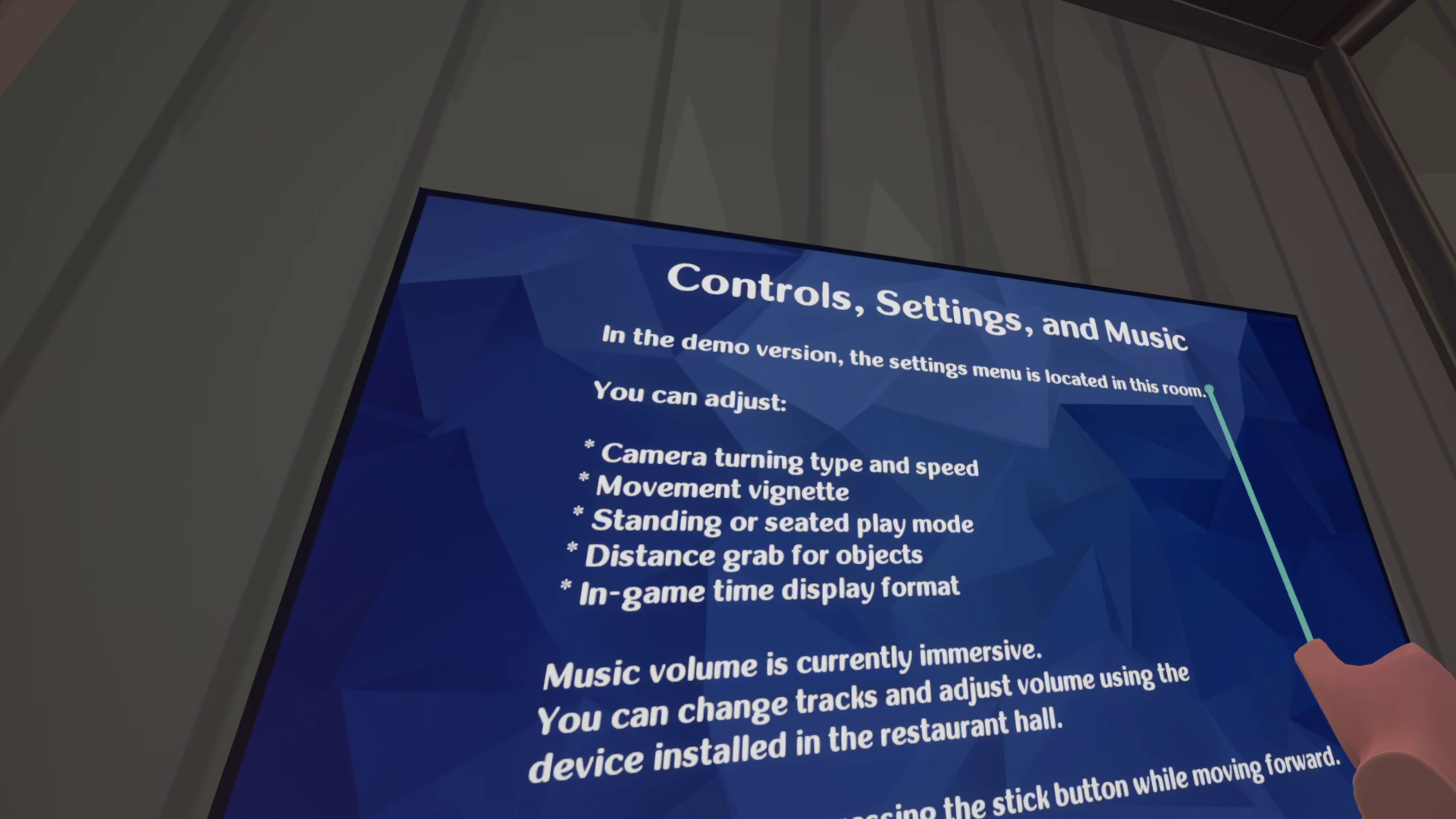
And yet, the settings menu was not actually in this room (or anywhere at all that I could see)
When a demo can't let me experience what the game is actually about, that's not a demo problem—that's a design problem.
Tag Those Developers!
This is the most leveraged thing you can do during Next Fest, and most creators skip it entirely.
Tag the developers!!!
Not after you see if the content performs. Not selectively. Every single time, as long as the platform you are posting to allows/supports tags (and the developer is on that platform of course).
Developers are actively hunting for coverage during Next Fest. They're online, they're motivated, and they will absolutely share and amplify your content if you tag them. This isn't begging for engagement—it's recognizing that you both benefit from the same outcome.
On X, my cover post said "Steam Next Fest is running this week—I'm trying some VR demos and posting the ones worth your time. Thread below. I'll add more throughout the week as I play them!" Then each reply in that thread covers one game and tags the developer:
Same approach on other platforms. If the platform allows tagging and the devs are active there, tag them. In descriptions, in comments, wherever it makes sense.
The developers will find your post, share it, and introduce your content to their audience. You get reach. They get coverage. Everyone wins.
Deciding What Format Each Game Deserves
Not every game needs the same treatment. Format decisions are strategic, not random.
X thread (what I'm doing in real-time): Post as I play throughout the week. One game per post in a thread. Quick coverage, immediate visibility, tags developers for amplification, builds an ongoing resource people can bookmark and return to. This works because X rewards frequent posting and developers are actively monitoring tags during Next Fest.
YouTube Short (what I'm batching): Wait until I have 5 solid games, then edit a "5 VR Demos from Steam Next Fest You Should Try Part #1" video. This requires more patience but creates evergreen content that can perform well beyond the event week. I'll do multiple parts if I find enough games worth covering.
Why 5-10 max per video? Attention spans. If you try to cram 15 games into one video, people tune out. They can't remember what you showed them. Keep it tight, keep it valuable.
What about livestreams? Different goal entirely. Streams are for live reactions and discovery. You go in blind, experience things in real-time, and your audience gets authentic first impressions. Some games will be great. Some will be terrible. That's the point. The best moments become clips you can reuse on socials immediately.
Different formats serve different purposes. X thread for reach and developer engagement. YouTube Shorts/Tiktoks/IG Reels for evergreen value. Livestreams for authentic reactions and clip generation. Use all three if you have time, or pick the one that aligns with your current goals.
What This Actually Teaches About Content Strategy
Steam Next Fest happens twice a year. This process applies every single time—and it applies to way more than just game demos.
Triage before you commit. Whether it's Next Fest demos, games to review, or content ideas to pursue, strategic prioritization beats reactive consumption every time. Know what you're looking for before you start.
Recognize red flags early. The faster you identify what's not worth your coverage, the more time you have for what is. Stopping early isn't quitting—it's being strategic with your time.
Format decisions are strategic, not default. Every piece of content doesn't need the same treatment. Match format to goal. Real-time thread for engagement and developer reach. Batched video for evergreen value. Livestream for authentic discovery.
Developer relationships matter. Tagging isn't just courtesy—it's leverage. Developers amplify coverage because it benefits them too. Use that.
Coverage is curation. Your audience doesn't need you to play everything. They need you to find the stuff worth their time and explain why it matters. That's the actual value you provide.
Next Fest is overwhelming if you treat it like you have to see everything. It's strategic if you treat it like a content opportunity with clear evaluation criteria and intentional format choices.
The games change every event. The process doesn't.
Everything I just explained—strategic coverage, format decisions, developer engagement—that's content strategy in action. VR Content Lab goes way deeper with frameworks for building sustainable creator income, positioning yourself for opportunities, and working smarter instead of burning out. It's a self-paced video course with a Discord community where you can get feedback and connect with other creators actually building this. No fluff—just the systems that work.
Check it out and enroll at vrcontentlab.com.
