5 Creator Myths That Keep You Stuck (And Why Small Creators Believe Them)
I spent years believing I was too small to matter.
Posted consistently. Improved my quality. Hit all the "basics" everyone tells you to do. And still waited for some magical follower milestone before I'd be "ready" for real opportunities.
Spoiler: The milestone was bullshit. The waiting was the problem.
Here are the five myths I believed that kept me stuck—and why they're probably holding you back right now.
Myth 1: "I Need 100K+ Followers Before Brands Will Care"
The reality: Most indie brands and small studios can't afford creators with 100K+ followers. They're working with budgets of $500-2,000 per month for creator partnerships. A macro creator charging $5K per post? That's an entire quarter's budget gone in one deal.
You know who fits their budget perfectly? Nano creators (1K-10K followers) charging $50-100 per post. Micro creators (10K-100K) at $100-500. You're not too small—you're literally the size they can actually afford to work with. (I broke down the full economics of why small creators win opportunities in this post about nano, micro, and macro influencers if you want the deep dive on brand budgets and engagement rates.)
I got invited to Meta's Quest Creator Program with less than 7K YouTube subscribers in Fall 2024. Not because I was special, but because I positioned myself as someone who solved specific problems in a niche space. Brands aren't scrolling through mega-influencers hoping to find someone appropriate. They're searching specific niches and reaching out to creators who already own that space.
The myth exists because it's easier to believe you're "not ready yet" than to admit you don't know how to pitch yourself. One requires patience. The other requires learning something new. In one of my favorite books, Ego Is The Enemy, Ryan Holiday talks about how ego loves to hide behind "I'm not ready" because it protects us from the vulnerability of actually trying. Waiting for 100K followers is just ego in disguise.
Myth 2: "I Need to Go Viral to Succeed"
Every creator watches someone blow up overnight and thinks "that's the path." One viral video changes everything, right?
I've had multiple videos hit over 1.5 million views. My Neko Atsume VR video got 2.3 million. Stab It VR hit 2.4 million. My Vive face tracker video reached 1.6 million. Want to know what happened after each one?
Temporary follower spike. Temporary engagement boost. Then everything went back to baseline. The viral videos didn't lead to brand deals. They didn't create sustainable growth. They just brought a bunch of people who wanted more of that one specific thing, got disappointed when my regular content was different, and left.
You know what actually led to opportunities? Consistently showing up as the person who solves specific problems in my niche. When brands needed creators who understood my space, they found me. Not because I had millions of views on one random video, but because I'd built a reputation for knowing my stuff.
Viral videos are lottery tickets. They feel amazing when they happen, but they're not a strategy. Consistent positioning is a strategy. One makes you feel successful for a week. The other actually makes you money.
Carol Dweck's research in Mindset shows how people with a growth mindset focus on process over outcomes. Chasing virality is outcome-focused—you're hoping for the lottery win. Building positioning is process-focused—you're doing the work that creates opportunities regardless of whether any single video explodes.
Myth 3: "I Need to Post Every Single Day or the Algorithm Will Forget About Me"
The grind culture version of creator advice: daily uploads, constant content, never stop posting. If you take a day off, your account dies. The algorithm forgets you. Your audience moves on.
The reality: Burnout kills more creator careers than inconsistent posting ever will.
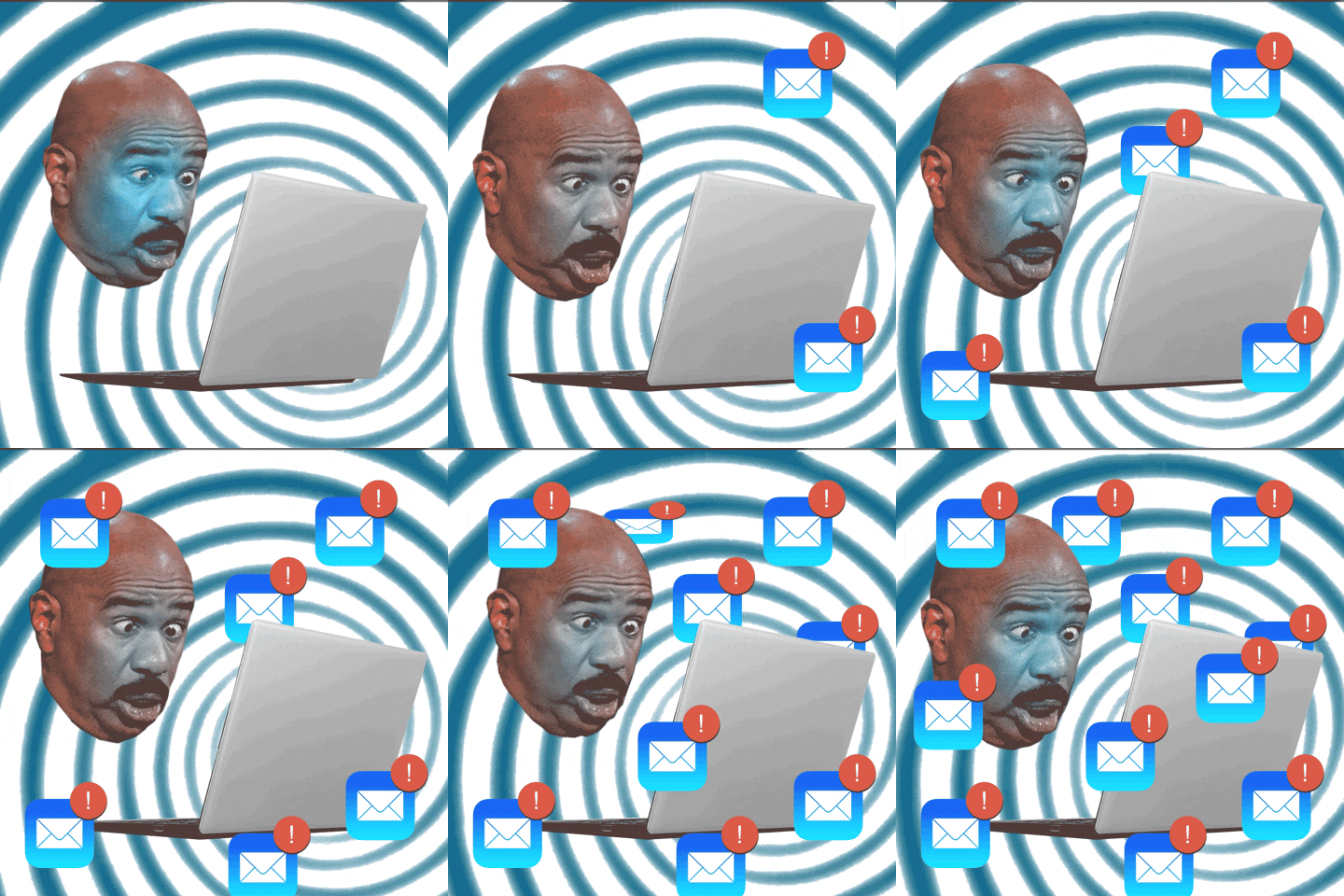
I've gone weeks without posting occasionally. Sometimes because life happened, sometimes because I was working on other or bigger projects, sometimes because I just needed a break. My engagement didn't crater. My opportunities didn't disappear. The world kept spinning.
When you DO post, does it serve your goals? One strategic video per week that positions you correctly is worth more than seven daily posts that just feed the content machine. The 80/20 Principle applies here perfectly—20% of your content probably drives 80% of your results. Figure out what that 20% is and do more of it, instead of burning yourself out trying to post daily mediocrity.
Right now I'm thinking about abandoning TikTok entirely, even though I have way more followers there. Why? The same content performs significantly better on YouTube Shorts. Like, way better (for me personally). And I want to experiment with Instagram for the cozy, lifestyle, behind-the-scenes content I've been craving to make. That's strategic focus based on actual data plus creative fulfillment—not just platform hopping because everyone says I "should" be everywhere.
The algorithm rewards consistency over time, not daily panic posting. Posting three times a week for a year beats posting daily for two months before you burn out and quit. Sustainable pace always wins.
Myth 4: "I Should Wait Until I'm 'Ready' to Pitch Brands"
The most expensive myth on this list. "I'll reach out once I hit 10K. Once I have better equipment. Once my content is more polished. Once I feel more professional."
The reality: You're ready when you can demonstrate value, not when you hit arbitrary milestones. And demonstrating value has nothing to do with follower counts.
Here's what "ready" actually looks like:
You know your engagement rate (and how to calculate it—see the nano/micro/macro post for the breakdown)
You understand who your audience is
You can explain what problems your content solves
You have examples of content that performs well
You can propose specific ideas instead of asking for "opportunities"
None of that requires 50K followers. All of it requires understanding your positioning.
Back to Ryan Holiday: "Impressing people is utterly different from being truly impressive." Waiting until you feel impressive enough is just another way ego protects itself from rejection. Actually being impressive means doing the work regardless of how ready you feel.
The myth exists because rejection feels personal when you're small. If you get rejected at 2K followers, it's easy to think "I need to get bigger." So you wait. And wait. And eventually someone at 50K followers tells you the same thing: "I'll pitch when I'm bigger." The goalpost moves, but the fear stays the same.
Myth 5: "More Platforms = More Success"
The grind culture version of creator advice: post everywhere, all the time. TikTok, YouTube, Instagram, Twitter, LinkedIn, Threads, newsletter, podcast. If you're not on every platform, you're leaving opportunities on the table.
The reality: Strategic focus beats scattered presence. Every platform you add is another set of algorithms to learn, posting schedules to maintain, comment sections to monitor, and analytics to track. Unless you have a team or unlimited time, spreading thin means doing everything poorly instead of doing anything well.
The 80/20 Principle is ruthless here: 20% of your platforms probably drive 80% of your results. But most creators can't tell you which 20% because they're too busy trying to maintain presence on all of them.
I built my foundation primarily on one platform, then added others strategically once I had systems in place. Like I mentioned earlier, right now I'm actively pulling back from TikTok (despite having significantly more followers there) to experiment with Instagram. Not because I'm chasing a new platform, but because I'm testing where my energy is best spent for my current goals.
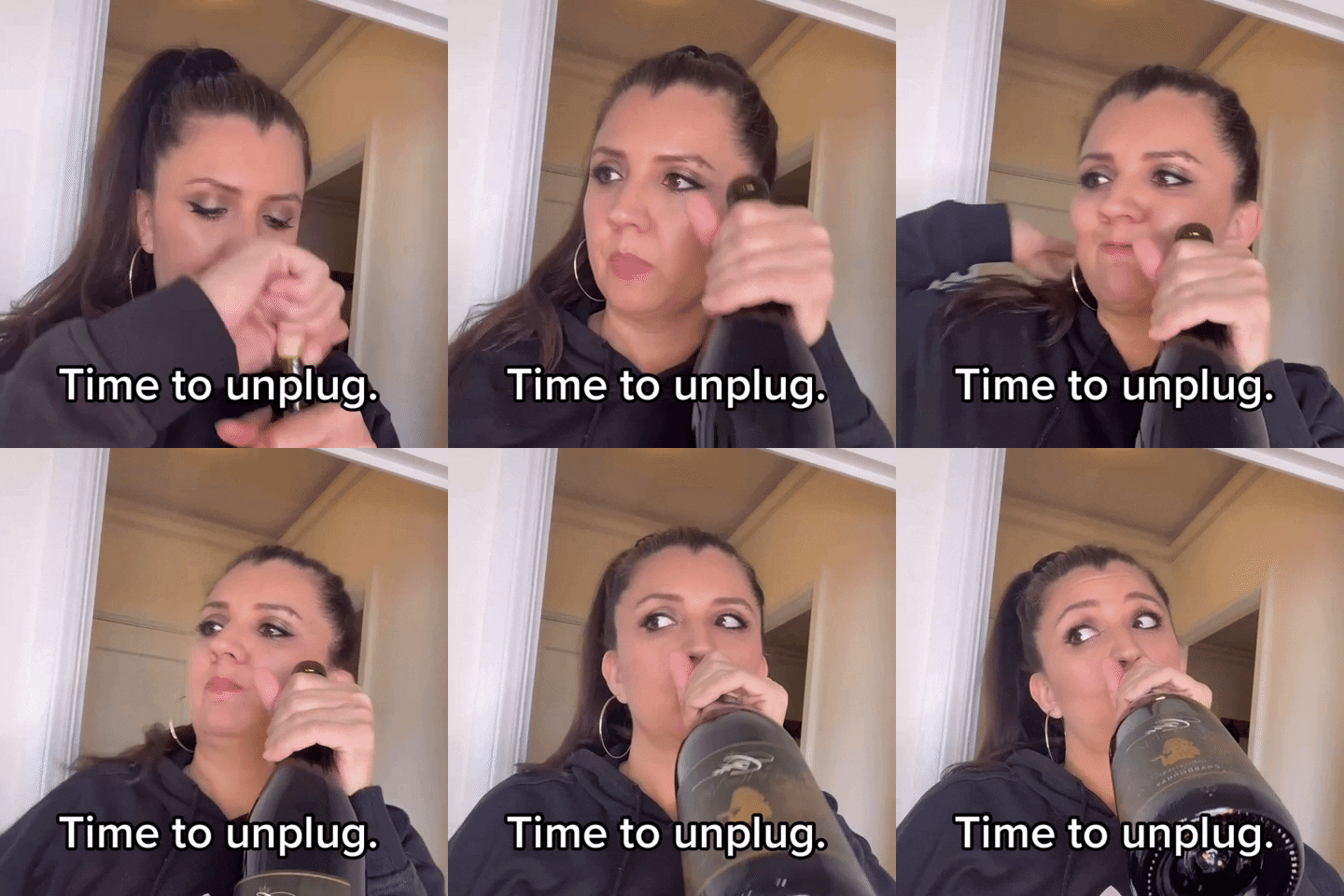
Different platforms serve different purposes. One might be your discovery engine. Another might be where people actually get to know you. Another might be your community space. But trying to win on all of them simultaneously just means you're exhausted and mediocre everywhere.
The myth exists because successful creators are on multiple platforms, so new creators assume that's the path. What you don't see: most of them built on ONE platform first, then expanded strategically once they had systems in place. You're seeing their current state, not their starting point.
What Actually Works (The Part Nobody Wants to Hear)
None of these myths exist in isolation. They're all variations of the same core belief: "I'm not ready yet."
Not big enough. Not viral enough. Not consistent enough. Not professional enough. Not on enough platforms. Not insert-excuse-here enough.
Carol Dweck calls this a fixed mindset: believing that success comes from inherent qualities (size, virality, perfection) rather than from learnable skills and actual effort. The growth mindset version: you're probably ready now. You just don't know how to position yourself yet.
You don't know how to calculate your actual value. You don't know what to say in pitch emails or how to find the right contacts or what to charge when someone says yes. Those are learnable skills. Waiting for arbitrary milestones won't teach you any of them.
I wasted years believing these myths. Started making actual money once I stopped. The difference wasn't my follower count—it was understanding that small creators with the right positioning beat large creators with no strategy every single time.
Stop waiting. Stop labeling yourself as a ‘small creator’ (mentally, this will keep you there). Start learning. The opportunities exist at your current size. You just need to know how to find them.

Everything explained here —calculating your real value, positioning yourself for brands, pitching specific campaigns instead of generic sponsorships—that's the foundation. VR Content Lab goes way deeper with actual pitch templates, pricing strategies for your follower count, how to find the right contacts, what to put in your media kit, and how to negotiate when you've never done it before. It's a self-paced video course with a Discord community where you can get feedback on your pitches and connect with other creators actually building income. No fluff—just the frameworks and templates that worked when I was under 7K subscribers trying to figure this out too!
Check it out and enroll here.
