Nano, Micro, or Macro: Why Small VR Creators Win Opportunities
Traditional gaming content is saturated. You're fighting for attention against creators with hundreds of thousands of followers and decade-long audiences. VR doesn't work that way. The space is open enough that you can actually build real opportunities without needing to get massive first.
In this space, being small might be your biggest advantage. Not despite your follower count, but because of it.
The Influencer Tier System
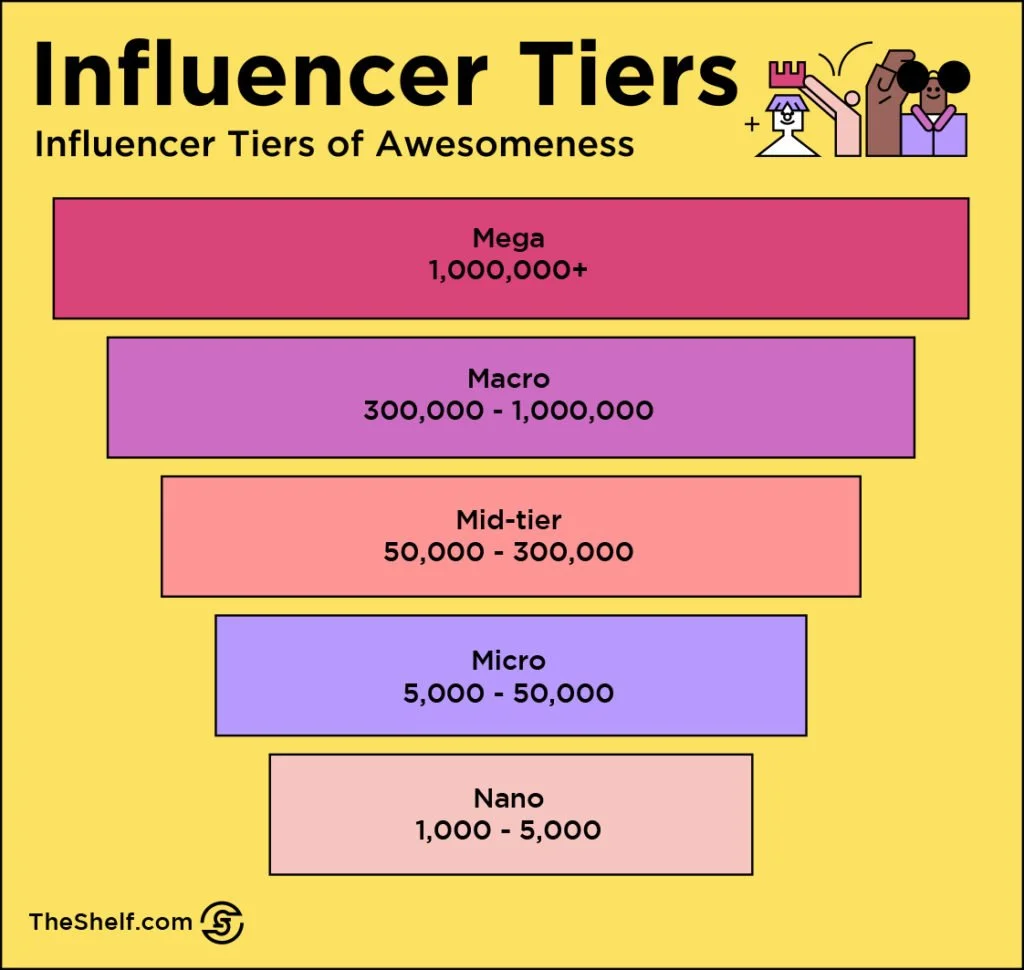
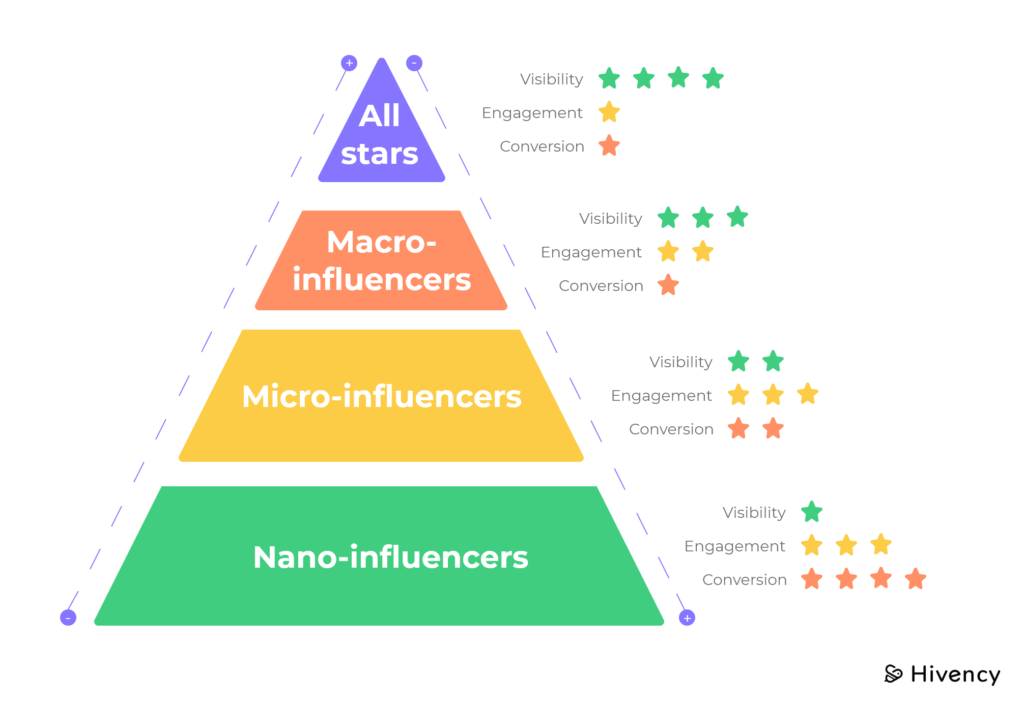
Most marketing teams use these ranges when budgeting creator campaigns. The exact numbers shift depending on who you ask, but this breakdown covers what brands typically look for:
Nano influencers usually have 1,000–10,000 followers. These are everyday creators with tight-knit communities where followers often feel like they personally know the creator.
Micro influencers range from 10,000–100,000 followers. They've got enough scale to matter but still maintain that personal connection. This is where I've built most of my success.
Macro influencers sit between 100,000–1 million followers. They're recognizable names in their niche with polished content and broader reach.
Mega influencers have over 1 million followers. Think celebrities, TV personalities, or top-tier gaming creators with massive production budgets.
Why Engagement Beats Follower Count Every Time
Brands don't pay for numbers on a screen. They pay for results. A micro creator with 15K engaged followers who trust their recommendations will move more products than a macro account with 400K passive scrollers (many of which might be bots/AI nowadays!). The data backs this up—nano and micro influencers consistently deliver higher engagement rates and better ROI than their larger counterparts.
When you're considering dropping $500 on a Quest 3, are you more likely to trust a mega primarily flat screen gaming influencer who got sent free hardware for a scripted promo, or a micro creator who genuinely uses VR daily and answers questions in their comments?
VR's Wide Open Advantage
Gaming YouTube is brutal. Oversaturated doesn't even begin to describe it. You're competing with creators who have full production teams, decade-long audiences, and algorithm mastery that comes from years of grinding.
VR is different. We're still early enough that quality creators get noticed. Game developers need authentic voices who can actually demo their titles properly. Accessory brands want creators who understand the tech beyond surface-level reviews.
VR requires actual expertise to showcase effectively. You can't fake understanding room-scale setup, comfort concerns, motion sickness, or multiplayer lobbies. Small creators who genuinely know this space are worth more than big names who don't (but put on a headset once for a 30m sponsored stream)
What Brands Want
Brand strategies have shifted hard in the past few years. The influencer marketing playbook that worked in 2020 doesn't work anymore.
Budget is flowing toward nano and micro creators because the math just works better. Instead of spending $50K on one macro creator who might get views but won't move products, brands can work with 20 micro creators for that same budget and get better reach, engagement, and conversion data.
Most VR game studios aren't EA or Activision with massive marketing budgets. They're indie teams and small studios working with what one marketing guide describes as "$500-2,000 per month testing budgets" for creator partnerships. The entire VR gaming market is still a fraction of the $200+ billion flat gaming industry, which means tighter budgets across the board.
This is actually great news if you're a smaller creator. You're not competing for budgets that don't exist. You're exactly in the price range where most VR studios are actually spending. A nano creator charging $50-100 per video or a micro creator at $100-500 fits perfectly into these budgets. A macro creator demanding $5K+ per post? That's an entire quarter's influencer budget gone in one deal.
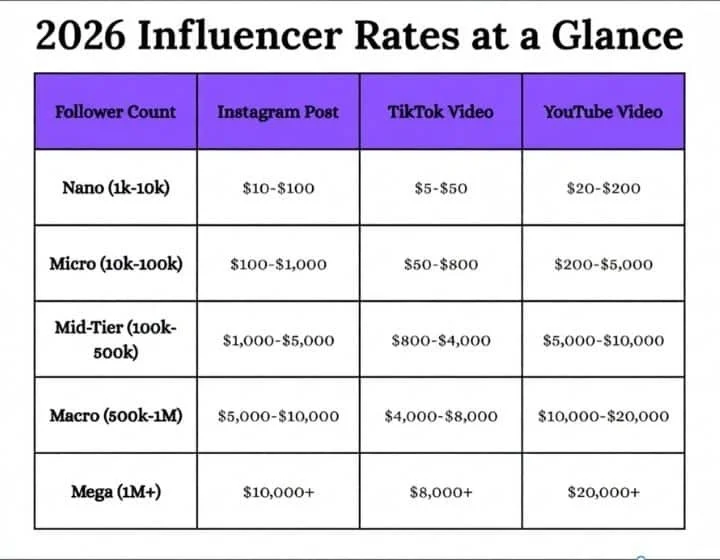
Chart adapted from Afluencer’s ‘Influencer Rates 2026’ guide, which aggregates real-world creator rate cards and industry benchmarks by follower tier. I’m using it here as a baseline to compare nano and micro rates in the VR niche.
Brands now care about:
Measurable results (clicks, wishlists, actual sales) over vanity metrics
Authentic recommendations from trusted voices over polished celebrity endorsements
Niche audience fit over broad, unfocused reach
Cost-per-result efficiency that fits realistic indie budgets
The Translation Problem
VR brands face a challenge that traditional gaming companies don't: most consumers still don't fully understand the technology. Room scale? Guardian boundaries? Passthrough mixed reality? This is where small creators absolutely dominate.
Mega influencers create spectacle. Micro creators create trust and education. When someone's trying to decide if VR is worth the investment, they want to hear from someone who remembers what it's like to be new. They want to see real play spaces, real setup struggles, real first impressions.
You become a translator between hardcore VR enthusiasts and curious newcomers. That's a position of massive value, regardless of your follower count.
Niche Beats Size Every Single Time
The tighter your niche, the more valuable you become to brands. Being "another VR creator" is okay. Being "the VR horror creator" or "the fitness VR person" or "the Quest 3 mixed reality expert" makes you immediately recognizable and targetable for specific campaigns.
When a VR horror game developer needs creators, they're not scrolling through mega-influencers hoping to find someone appropriate. They're searching specific niches and contacting micro creators who already own that space.
How to Position Yourself When You're "Small"
Stop saying "I only have X followers." Seriously, kill that phrase from your vocabulary. Here's what you say instead:
"I average 2K views per VR video with a 7% engagement rate, primarily Quest owners ages 16-25 in the US and Europe."
See the difference? One apologizes for size. The other demonstrates value and is specific.
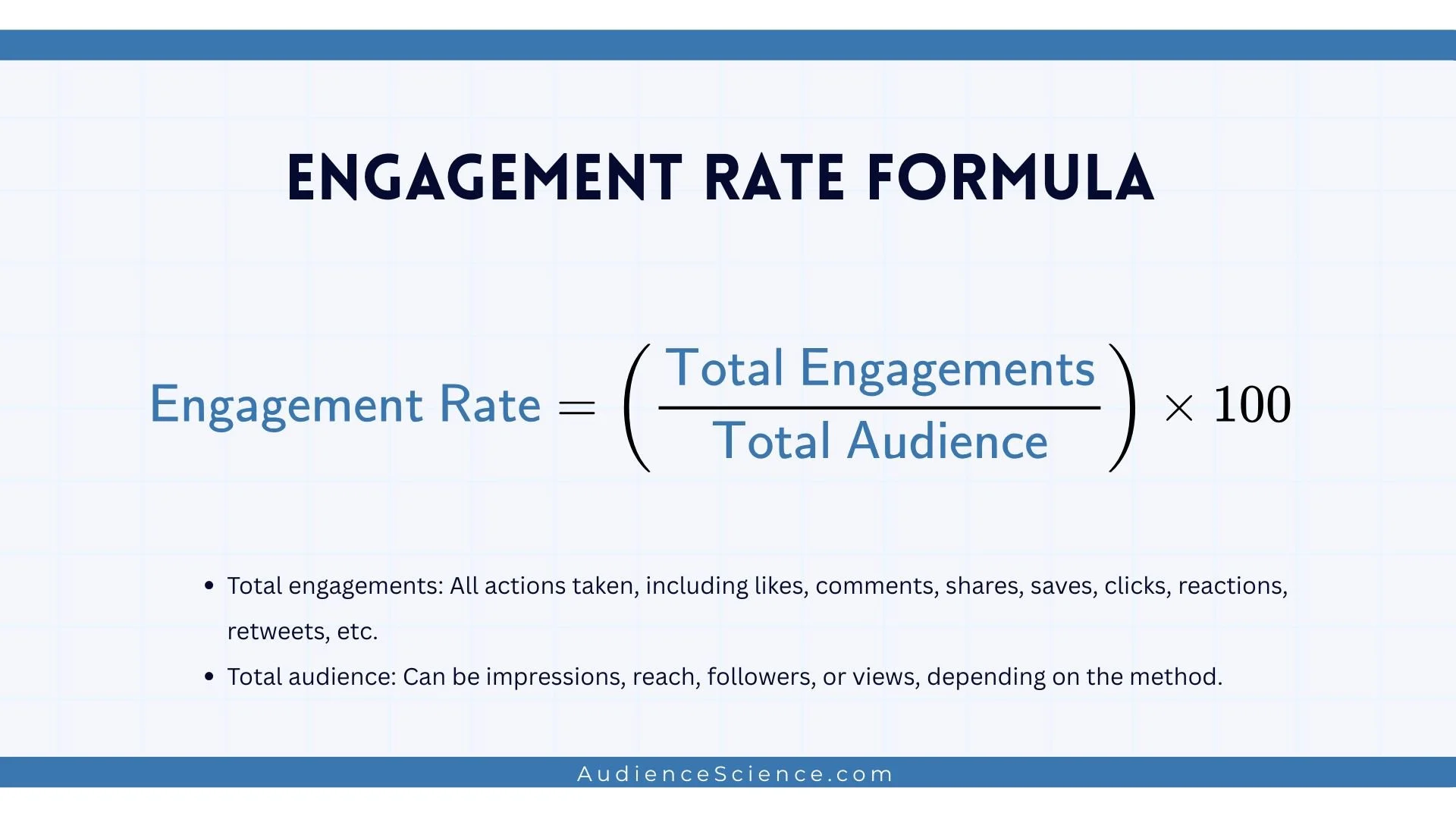
Calculate Your Engagement Rate
So how do you determine your engagement rate?
There are multiple correct ways to calculate engagement rate. The key is picking one method and staying consistent so you can track your performance over time.
For video content (TikTok, YouTube Shorts, Instagram Reels): (Likes + Comments + Shares) ÷ Views × 100 = Engagement Rate %
This shows how many people who actually watched your video bothered to interact with it. This is what matters most for short-form content.
For overall channel health (media kits, pitches): (Likes + Comments + Shares) ÷ Followers × 100 = Engagement Rate %
This is the classic influencer metric that most brands still use when evaluating creator profiles. It shows what percentage of your audience consistently engages with your content.
You might get different numbers with each formula—that's normal. A video that goes slightly viral to non-followers will show lower engagement by views but might boost your engagement by followers. Just pick one method and stick with it when you're comparing your own performance over time.
Finding your numbers on TikTok: Go to your profile → tap the menu icon (three lines) → Tiktok Studio → Analytics. Under "Content," you'll see your last 7 or 28 days of videos. Tap any video to see likes, comments, shares, and views. Do the math on your recent 5-10 videos (or last 30 day) and average it out.
Finding your numbers on YouTube: YouTube Studio → Content. Pick a date range. You'll see views, likes, and comments right there. YouTube doesn't publicly show shares, so just use (Likes + Comments) ÷ Views × 100. It's not perfect, but it gives you a ballpark.
Finding your numbers on Instagram: Go to your profile → tap the menu → Insights → Content you shared. Tap any recent Reel to see plays, likes, comments, and shares. Same formula: add them up, divide by plays (not reach), multiply by 100.
Different for each platform depending on what stats are available to you, of course
What's "good"?
3-5% is solid for most platforms
6-8% is strong
9%+ means your audience genuinely cares about your content
Compare this to mega creators who often sit at 1-2% because their audiences are so broad and passive. Your 7% engagement with 5K followers is legitimately more valuable than someone's 1.5% engagement with 500K followers.
Pitch Ideas, Not Just Sponsorships
Generic "I'd love to work with you" emails get ignored. Specific campaign ideas get responses.
Instead of asking for sponsorship opportunities, propose actual content plans: "3-video short form series for your co-op title, and user-generated clips you can reuse on your game’s socials." Be specific about deliverables, timeline, and how you'll measure success.
Smaller creators can offer flexibility that larger creators can't. You can test campaigns, adjust based on feedback, and provide authentic integration instead of scripted promos. Frame this as an advantage, not an apology.
Making It Work at Your Current Size
Whether you're at 1K followers or 50K, opportunity exists right now. Not someday when you hit some arbitrary milestone. Right now.
If you're in the nano range (1K-10K):
Your superpower is intimacy. You know your community members by name. You respond to every comment. You can host multiplayer sessions where everyone actually gets to play together. Brands love this for building genuine word-of-mouth and testing new releases with engaged early adopters.
Position yourself as the ultimate test audience. Offer detailed feedback, community sentiment reports, and direct access to passionate VR players who will actually try new things.
If you're in the micro range (10K-100K):
You've got the sweet spot most brands are actually budgeting for. You're big enough to deliver meaningful reach but small enough to maintain authenticity and charge reasonable rates.
Focus on demonstrating your expertise. Create in-depth content that shows you understand VR beyond surface-level coverage. Build relationships with developers and other creators. This is where you can start transitioning from "small creator getting occasional deals" to "established voice that brands actively seek out."
The Real Advantage
You know what bigger creators lose as they scale? The ability to actually be themselves.
Macro and mega influencers operate like small businesses. They have teams, schedules, brand guidelines, PR considerations. Their content goes through review processes. Their community interactions get managed by assistants. The authentic voice that helped them grow often gets polished away.
You don't have that problem. You can still be weird. You can experiment. You can change directions without consulting a “business manager”. You can respond to your community in real-time and build content directly around what they're actually asking for.
That authenticity is worth more than follower counts. It's what got me noticed by LIV, selected for the Meta Quest Creator Program, and connected to opportunities I never expected with a following that most people would call "too small."
The VR space is wide open. The brands are actively looking for creators. The opportunities exist right now at every size. You don't need to wait until you hit some magical number to start pitching, creating value, and building real relationships with companies that need what you already have.
Your "small" following might be the exact right size.

Everything I explained in this post—calculating your real value, positioning yourself for VR brands, pitching specific campaigns instead of generic sponsorships—that's the foundation. VR Content Lab goes way deeper with actual pitch templates, pricing strategies for your follower count, how to find the right contacts, what to put in your media kit, and how to negotiate when you've never done it before. It's a self-paced video course with a Discord community where you can get feedback on your pitches and connect with other VR creators also working on building income.
Check it out and enroll at here.
