
YouTube Changed How It Counts Views. Here's What That Means

August 24, YouTube changed how they count views. If you've been paying attention to your analytics via YT Studio, you might've noticed your view numbers may look a bit different now.
What Changed (And When)
Before August 24, YouTube used different systems to count views across different formats. Shorts had one way, long-form videos had another, live streams had another.
Now however it's unified and a view counts is as soon as playback begins, first frame.
That means these all count as public views now:
Someone hovers over a thumbnail long enough for the preview to autoplay
Someone clicks to watch a short
A short starts playing in the Shorts feed and the viewer stays watching
A long-form video, podcast, or livestream starts playing because someone clicked or stayed past the initial seconds
Before, some of that stuff would've been filtered out or counted differently. Now it's all grouped together under "public views."
The Real Impact
Your public view count is now broader. It measures exposure and play-start more than actual engagement.
For example: A VR headset review longform appears on someone's YT home page. The thumbnail looks interesting, so they hover over it. The preview video plays automatically. However, they don't click, they keep scrolling and never watched the actual video.
Under the new system, that now counts as a “public view” but under the old system (for long-form) it probably didn't count, because they never technically clicked to watch.
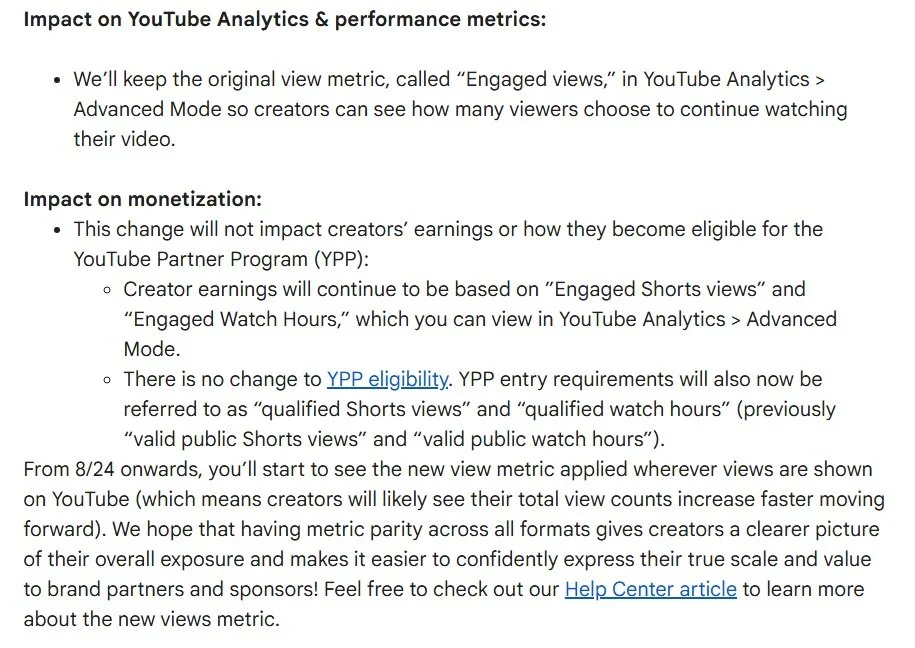
From Youtube’s support page here.
So your view count went up, but did your audience actually engage? Not in that case.
This is why YouTube kept emphasizing in their announcement that public views are now a broader exposure measure, while engaged views are the stronger signal of intentional, meaningful viewing.
Public views answer: "How often did the content begin playing?"
Engaged views answer: "How often did someone intentionally click to watch or stay past the opening moment?"
Those are different questions. Both are useful, but they're NOT the same thing.
ALL VIEWS ARE NOT TO BE TREATED EQUALLY
One number can't tell you if your video actually worked. Public views tell you reach, but they don't tell you if people actually watched, stayed, or cared (which matters way more, especially for growth and sponsorships).
Instead, track a small set of metrics where each one answers a specific question and tells you what to actually do:
Reach: Public views and impressions. How many people saw your video? Keep watching these, but rename them mentally to "video starts" instead of "proof of attention." It's useful data about reach, but it doesn't tell you if people actually watched or cared.
Packaging: CTR (click-through rate), impressions, traffic sources. Did your title and thumbnail earn intentional clicks? This hasn't changed and it's still critical. Your thumbnail's ability to earn clicks matters just as much as it did before.
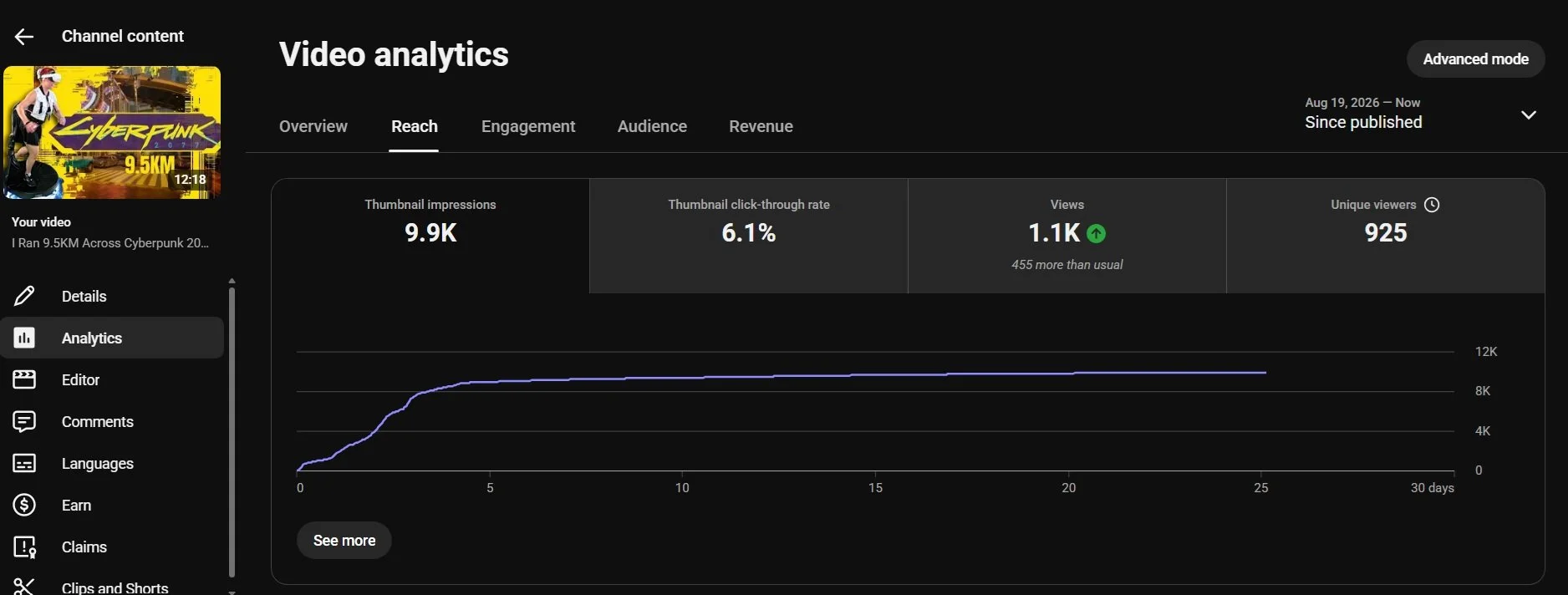
Intentional attention: Engaged views and engaged-view rate. Of all the starts, how many started watching intentionally? Add engaged views to every post-publish review. This is YouTube's direct replacement for the old more-qualified view concept. Engaged views matter way more than public views now.
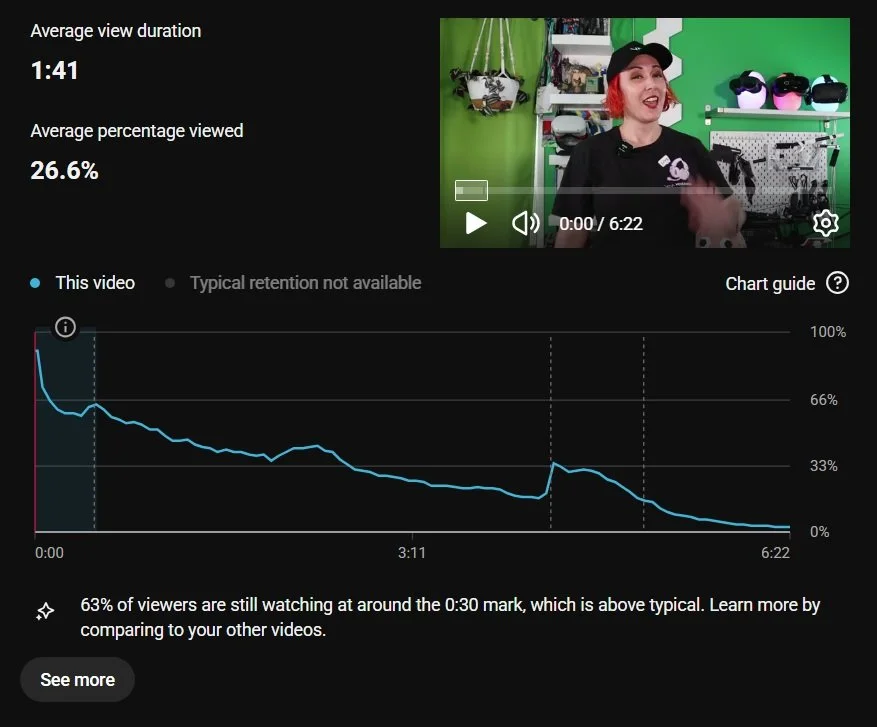
Viewer satisfaction: Retention curve, average view duration, average percentage viewed. Did viewers stay and feel like they got value? Don't just look at average duration, use the retention curve. Look for where people leave. The opening hook, an overlong intro, a delayed answer, a confusing setup, a sponsor read in the wrong spot, or a thumbnail mismatch can all tank retention. Find those moments.
Channel growth: Subscribers gained, returning viewers, new vs. returning. Is this building loyalty or just one-off traffic?
Revenue and business value: RPM, revenue, qualified watch hours, affiliate clicks, sales, leads. Does the audience actually support you financially? (If $$ is something you care about - if Youtube is just a hobby for you, you can disregard these metrics)
Don’t forget not to judge a 20-second short by the same benchmarks as a 15-minute tutorial or a 2-hour livestream. Each format has different success metrics.
iN tHE eND

Sorry, the subtitle just instantly made me think of this
YouTube's new public view count is best understood as a reach metric. It tells you how many times content started playing. That's valuable data, but it's not proof that your audience engaged.
The creators who succeed are not going to be the ones with the biggest first-frame video start numbers. They're going to be the ones who turn those starts into engaged views, sustained watch time, returning viewers, and measurable results.
This has always been true, YouTube just made it more obvious.
Understanding what metrics actually mean is what separates creators who chase vanity numbers from creators who build sustainable channels. That's what VR Content Lab teaches: strategy over metrics, meaning over volume.
Self-paced course, Discord community, other creators thinking strategically about what success actually looks like.
Check it out at vrcontentlab.com.
